
Why Bathroom Exhaust Fans Are Worth Installing Properly
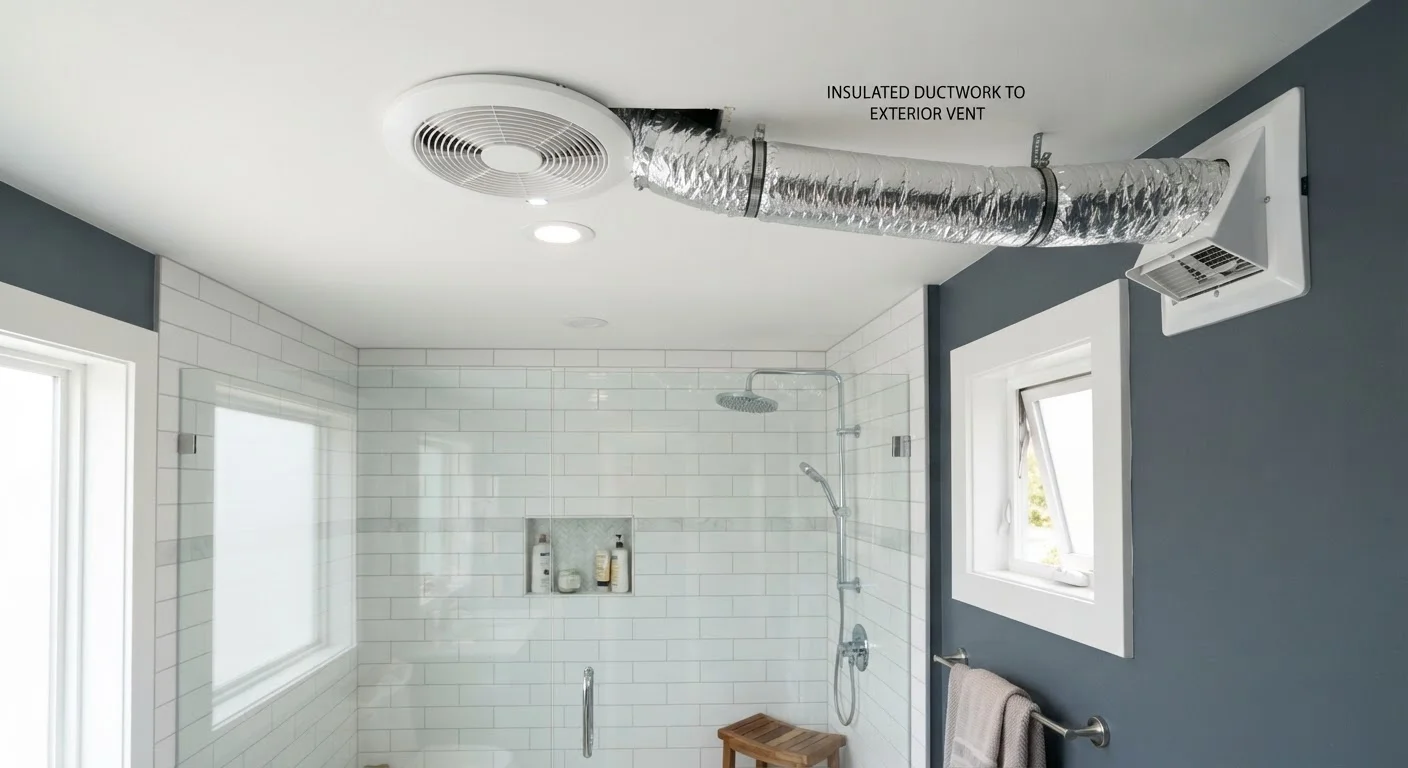
Photo credit: ProximityFinds.com | One-stop Reading Source
In this article
Undersized or poorly vented bathroom fans quietly cause mold and structural moisture damage. Here's what proper ventilation actually requires.
Key Takeaways
- An undersized fan cannot remove enough moisture to prevent mold and structural damage.
- Venting exhaust into the attic - instead of outdoors - is a common and costly installation mistake.
- Fan ductwork should be insulated in unconditioned spaces to prevent condensation inside the duct.
- Most bathrooms require a fan rated for at least 50 CFM, with larger or enclosed spaces needing more.
- Electrical work for a new fan installation typically requires a permit and a licensed electrician.
The Real Cost of Poor Bathroom Ventilation
Moisture is one of the most destructive forces inside a home, and the bathroom generates more of it in a short window than almost any other room. A single hot shower can release roughly a pint of water vapor into the air. Without adequate ventilation, that moisture settles into drywall, grout, paint, subflooring, and framing - quietly degrading them over months and years.
Mold and mildew are the most visible consequence, but the structural damage is often worse. Repeated wetting cycles cause wood framing to swell, weaken, and eventually rot. By the time homeowners notice soft flooring or bubbling paint, the underlying damage can be extensive and expensive to repair.
A properly functioning exhaust fan is the primary defense against all of this. The problem is that many fans in American homes are undersized, poorly installed, or vented somewhere other than the outdoors.
50 CFM
Minimum fan capacity required by most building codes
The International Residential Code sets 50 CFM as the minimum intermittent mechanical ventilation rate for bathrooms without operable windows.
~1 pint
Water vapor released by a single hot shower
Building science estimates suggest a typical 10-minute shower introduces roughly 0.5-1 pint of moisture into indoor air.
15-20 min
Post-shower fan run time recommended
HVAC and building science guidance generally recommends running the exhaust fan for at least 15-20 minutes after showering to fully clear residual humidity.
Sizing: Why CFM Numbers Actually Matter
CFM - cubic feet per minute - is the standard measure of how much air a fan moves. The Home Ventilating Institute recommends a minimum of 1 CFM per square foot of bathroom floor area. A 50 CFM fan is the minimum allowed by most building codes, but it's only adequate for bathrooms up to 50 square feet.
Bathrooms with an enclosed shower stall, a jetted tub, or ceilings higher than 8 feet need additional capacity. A common rule of thumb adds 50 CFM for each toilet, shower, or tub in a larger or compartmentalized layout. Oversizing slightly is rarely a problem; undersizing consistently is.
Choose a Fan Rated Higher Than Your Minimum
Real-world CFM drops as duct length increases and bends are added. Selecting a fan rated 20-30% above your calculated minimum compensates for this resistance. Look for the fan's published CFM at 0.1 inches of water gauge (the standard test pressure) as a baseline for comparison.
Fan packaging lists CFM at a specific static pressure - real-world performance in a long duct run will be lower. When in doubt, choose the next capacity tier up for your calculated square footage.
Where the Duct Goes: The Most Overlooked Problem
Sizing the fan correctly is only half the equation. Where the duct terminates matters just as much. The single most common - and damaging - installation error is routing exhaust ductwork into the attic rather than through it to the exterior. This feels like a shortcut during installation but introduces exactly the moisture problem the fan was meant to solve, now hidden out of sight.
All bathroom exhaust ducts must terminate at an exterior wall cap or a roof vent fitted with a backdraft damper. The damper prevents outside air from flowing back in when the fan isn't running.
Duct material also matters. Flexible insulated duct is widely used, but it must be pulled taut - not left in loops or compressed - to minimize resistance. Smooth rigid metal duct offers less airflow resistance for longer runs. Any duct passing through an unheated attic or crawl space should be insulated to prevent condensation from forming inside the pipe and dripping back into the ceiling.
Moisture-related issues aren't limited to exhaust fans alone. Poor caulking around windows and doors is another common entry point for water infiltration that compounds bathroom moisture problems.
Installation: What Requires a Professional
Replacing an existing fan with one that uses the same junction box and existing wiring is a straightforward task for a confident DIYer. The duct connection, mounting, and grille replacement follow the manufacturer's instructions and typically involve no new electrical work.
Adding a fan to a bathroom that doesn't have one - or relocating an existing fan to a better position - is a different project. It requires running a new circuit or extending existing wiring, cutting through ceiling drywall, routing duct through framing or attic space, and creating a new exterior penetration. This scope of work typically requires a building permit and, in most jurisdictions, must be done or inspected by a licensed electrician for the electrical portion.
Attempting unpermitted electrical work is both a safety risk and a liability issue if you sell the home. When in doubt, consult a licensed electrician for the wiring and a general contractor or handyman for the duct and carpentry work.
Permits and Codes Vary by Jurisdiction
Building permit requirements for exhaust fan installation differ by city, county, and state. Some jurisdictions require a permit for any new electrical circuit; others exempt low-voltage or like-for-like fan replacements. Always verify with your local building department before starting work - unpermitted improvements can complicate home sales and insurance claims.
Maintenance That Keeps the System Working
Even a correctly sized and installed fan degrades in effectiveness when neglected. Dust accumulates on the grille and impeller blades, reducing airflow significantly over time. Cleaning the grille every few months - removing it and washing it with warm soapy water - takes less than ten minutes and can restore meaningful CFM loss.
Periodically check the exterior vent cap to confirm the damper opens freely when the fan runs and closes fully when it stops. Bird nesting and debris blockage are common in roof-mounted vents and can completely prevent exhaust airflow.
If the fan sounds loud but moves little air, the motor bearings may be worn. If it runs quietly but still seems ineffective, measure the bathroom square footage against the fan's rated CFM - replacement with an appropriately sized unit is usually the right call.
Frequently Asked Questions

Author
Home Editorial Team
Home Editorial Team is the collective byline for our editorial team and contributor network. Articles published under this byline or an editorial pen name are researched, written, and reviewed according to our editorial standards for clarity, consistency, and independence before publication.
View all articles →