
Weatherstripping Types and Where Each One Actually Works
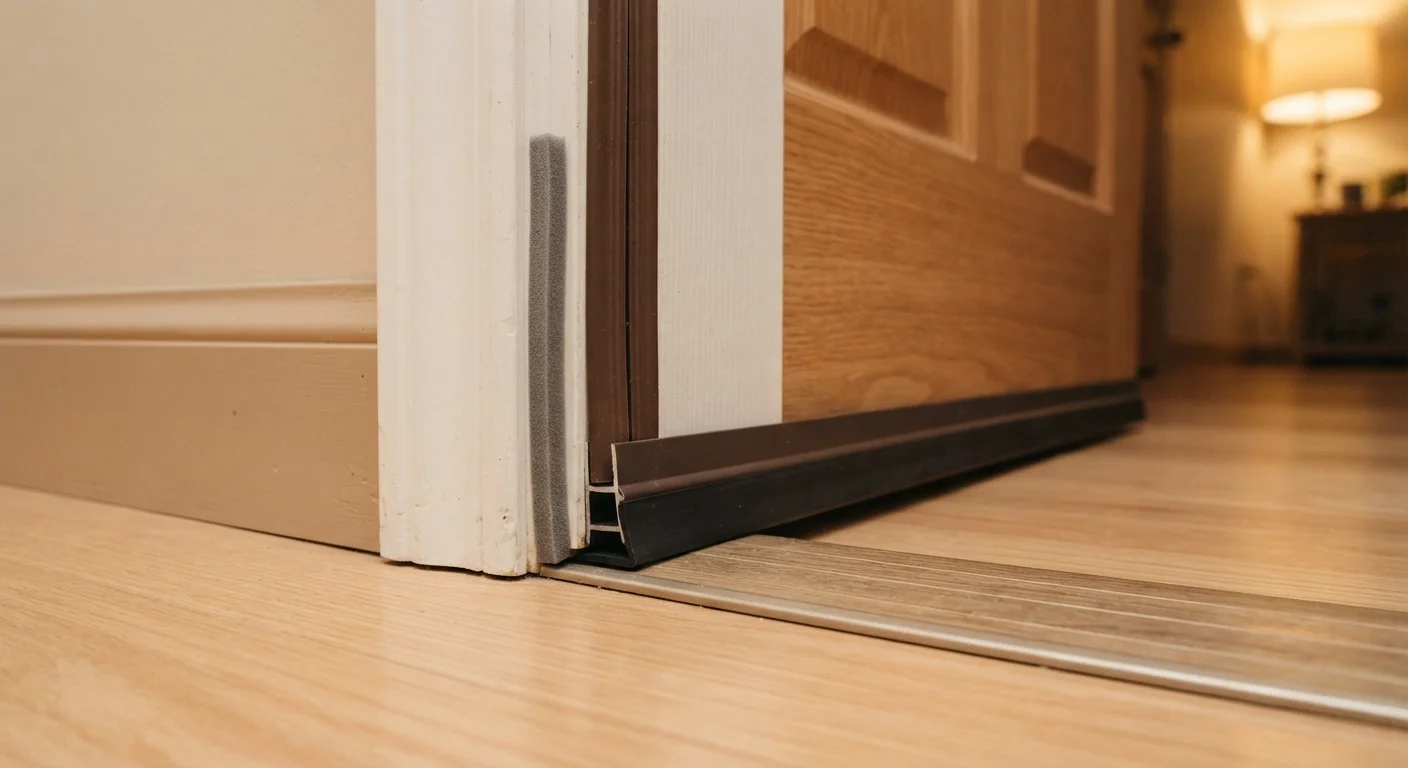
Photo credit: ProximityFinds.com | One-stop Reading Source
In this article
Foam tape, V-strip, door sweeps, and compression seals each suit different gaps and surfaces. Match the right weatherstrip to the right location.
Why the Type of Weatherstripping Matters
Not all gaps are equal. A side door with a slight bow behaves differently than a double-hung window rattling in its track, and installing the wrong material in the wrong spot often means replacing it within a season. Weatherstripping works by maintaining consistent contact between a movable surface - door, window sash, or hatch - and its frame. The material must compress or flex enough to fill the gap without fighting the hardware or wearing out prematurely.
Before buying anything, measure the gap you're sealing, note whether the surfaces slide, hinge, or compress against each other, and consider moisture and temperature exposure. Those three factors determine which type will actually hold up.
| Best for window sashes | Closed-cell foam tape or V-strip |
| Best for door bottom gap | Door sweep or automatic door bottom |
| Best for hinge/slide side of doors | V-strip (tension seal) |
| Best for door stops (top & latch side) | Compression strip (bulb, D- or P-profile) |
| Most durable rubber material | EPDM rubber |
| Minimum install temperature (adhesive types) | ~50°F (10°C) |
The Four Main Types and Where Each One Belongs
Foam Tape (Open- and Closed-Cell)
Self-adhesive foam tape is the most accessible option. Closed-cell foam resists moisture better than open-cell and is the right choice for exterior applications. It works well on window sashes, casement windows, and door stops - anywhere two surfaces press squarely together when closed. It's not suited for sliding channels because friction shreds it quickly. Typical lifespan is two to five years depending on UV and weather exposure.
V-Strip (Tension Seal)
Also called tension seal or pile weatherstripping, V-strip is a folded piece of plastic or metal that springs open to fill a gap. It excels in sliding channels - the sides of double-hung windows and the hinge side of doors - where foam would wear and adhesive products peel. It's nearly invisible when installed and tolerates repeated movement without breaking down. Nail-on metal V-strip lasts longer than adhesive-backed plastic versions.
Door Sweeps
A door sweep attaches to the interior bottom edge of a door and drags lightly across the threshold. It seals the largest single air gap in most entry doors. Automatic door sweeps retract slightly when the door swings open, reducing friction and floor wear. Standard sweeps with a rubber or vinyl fin work fine for most interior-facing doors; reinforced aluminum-backed sweeps are better suited for exterior doors exposed to hard use and changing seasons.
Compression Strips (Bulb and D-Profile)
Compression weatherstripping - shaped like a D, P, or bulb in cross-section - is designed for the door stop on the top and latch side of exterior doors. When the door closes, it compresses the bulb, forming a tight seal. It handles uneven or slightly warped frames better than flat foam tape because the bulb deforms to fill irregular gaps. Tubular vinyl is inexpensive; EPDM rubber is more durable and holds shape through more compression cycles.
Weatherstripping
Material installed around movable building components - doors, windows, hatches - to seal gaps against air, water, dust, and noise when closed.
V-Strip (Tension Seal)
A folded strip of metal or plastic that springs open inside a channel to create a resilient seal. Designed for sliding or hinge-side applications where friction is a factor.
Compression Weatherstripping
A bulb- or D-shaped strip that forms a seal by being physically compressed when a door or window closes against it. Well-suited to uneven or slightly warped frames.
EPDM Rubber
Ethylene propylene diene monomer rubber - a synthetic rubber valued for its resistance to UV, temperature extremes, and repeated compression cycles.
Door Sweep
A strip of material attached to the bottom edge of a door that brushes against the threshold to block the gap at the floor.
Closed-Cell Foam
A foam type where individual cells are sealed and do not interconnect, making it denser and more resistant to moisture absorption than open-cell foam.
Installation Tips and Common Mistakes
Surface preparation is the step most homeowners skip. Adhesive-backed products fail on dusty, painted, or oily surfaces. Clean with isopropyl alcohol and let the surface dry completely before pressing anything into place. Cold temperatures (below about 50°F) reduce adhesive bond strength, so install on a mild day or warm the surface first with a heat gun set on low.
For V-strip in a window channel, cut slightly long - about 1/8 inch - and compress it into the channel so it fits snugly without adhesive at the ends. On door frames, measure from the hinge to the latch side before cutting compression strip; a gap at either corner lets cold air bypass the seal entirely.
If you're unsure whether air is actually infiltrating a seam, hold a lit incense stick near the closed door or window on a windy day. Smoke movement reveals infiltration points more reliably than feeling with your hand. For a broader look at sealing strategies that complement weatherstripping, see our guide to common caulking mistakes - combining the two approaches addresses both movable gaps and fixed seams.
When to Call a Professional
Weatherstripping is a straightforward DIY task for standard doors and windows. However, if a door frame is visibly out of square, sagging, or showing signs of rot, sealing the gap with weatherstripping is a temporary fix at best. A licensed contractor or carpenter should assess the underlying structural issue before any weatherstripping is applied.

Author
Home Editorial Team
Home Editorial Team is the collective byline for our editorial team and contributor network. Articles published under this byline or an editorial pen name are researched, written, and reviewed according to our editorial standards for clarity, consistency, and independence before publication.
View all articles →