
Tile vs. Luxury Vinyl Plank: Choosing the Right Floor for Wet Areas
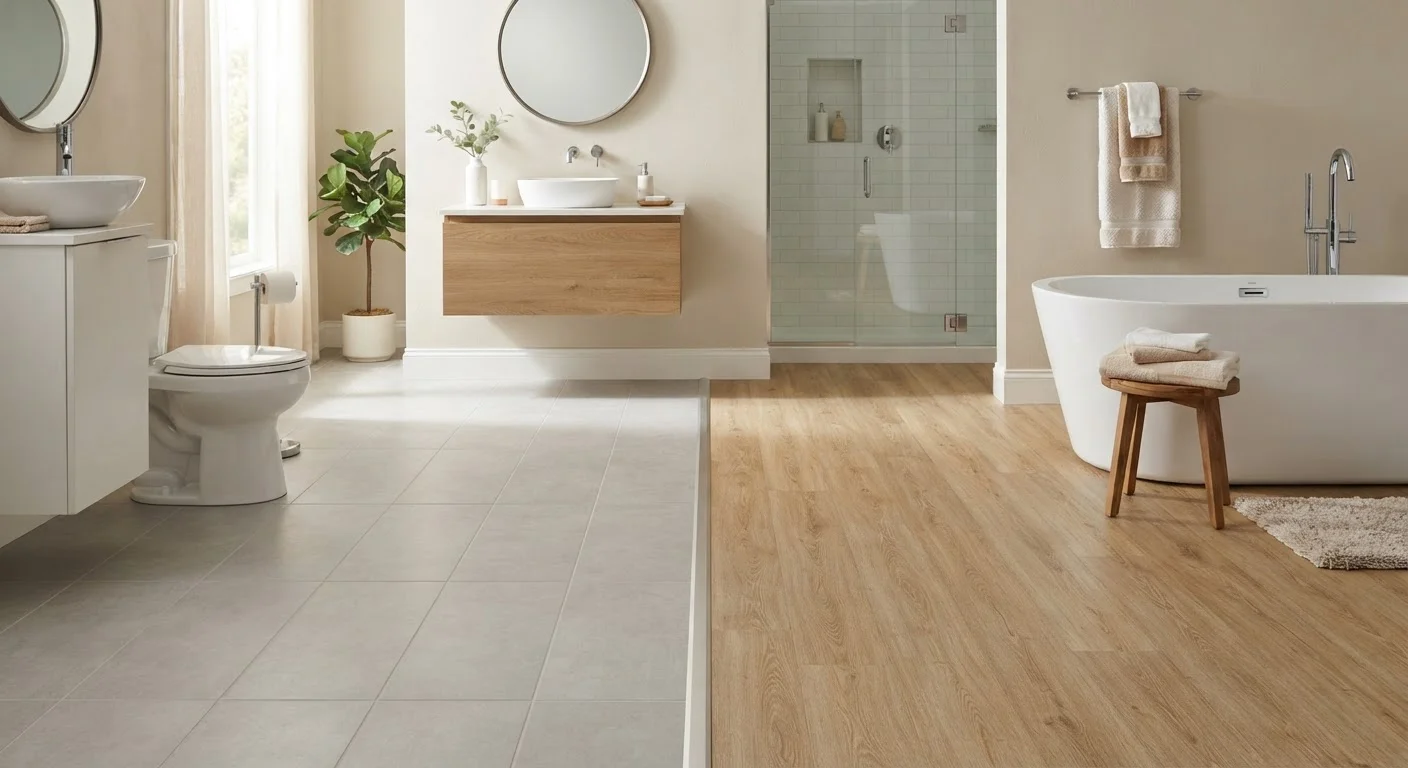
Photo credit: ProximityFinds.com | One-stop Reading Source
In this article
Ceramic tile and LVP are both water-resistant, but they differ in cost, comfort, and installation complexity. Here's how to weigh the trade-offs.
Key Takeaways
- Ceramic and porcelain tile are fully waterproof; LVP is highly water-resistant but not impervious at seams.
- LVP is warmer underfoot, quieter, and typically easier for DIYers to install than tile.
- Tile installation requires more skill, tools, and time but produces a longer-lasting result in high-moisture areas.
- Cost differences are meaningful: tile materials can cost less, but professional labor drives total tile costs higher.
- For shower walls and floors with direct water exposure, tile remains the professional standard.
How Each Material Handles Water
The most critical factor in any wet-area floor decision is how the material responds to water - not just surface spills, but humidity, standing water, and subfloor moisture over time.
Ceramic and porcelain tile are inherently waterproof. The tile itself does not absorb water; the vulnerability lies in the grout lines. Unsanded or improperly sealed grout can wick moisture into the subfloor over time. That's why wet installations always require a waterproof membrane beneath the tile bed and periodic grout sealing after installation.
Luxury vinyl plank is water-resistant, not fully waterproof. The planks themselves repel water effectively, but seams between planks are potential entry points if water sits long enough. Most LVP products carry claims of waterproof cores, yet sustained pooling - a slow toilet leak, for example - can eventually work under the locking joints and reach the subfloor. In bathrooms with moderate humidity and routine splashing, LVP performs reliably. In wet-set shower installations, it is not appropriate.
What About Sheet Vinyl and Grout-Free Options?
Sheet vinyl and peel-and-stick tiles are sometimes considered for wet areas. Sheet vinyl eliminates seam vulnerability and remains a durable, low-cost option, but it lacks the aesthetic range of LVP or tile. Grout-free large-format tiles exist but still require a sealed perimeter. Always verify that your chosen product is rated for wet-area use before purchasing.
Installation Complexity and DIY Feasibility
Installation difficulty is where the two options diverge most sharply for the average homeowner.
Tiling a floor requires surface prep, layout planning, mortar or adhesive mixing, careful tile cutting, grouting, and sealing - a multi-day process with a real learning curve. If you're new to the process, our guide to your first tiling project covers the fundamentals that separate a lasting result from one that cracks or pops early.
LVP, by contrast, uses a floating click-lock installation that most confident DIYers can complete in a single day. No adhesive or grout is required in most applications, and mistakes are far easier to correct before locking rows in place. The subfloor still needs to be flat and dry, but the skill threshold is considerably lower.
| Criterion | Ceramic / Porcelain Tile | Luxury Vinyl Plank (LVP) |
|---|---|---|
| Waterproofing | Fully waterproof (with membrane & sealed grout) | Water-resistant; seams are vulnerable |
| DIY Difficulty | High - multiple steps, tools, skill required | Low to moderate - click-lock floating install |
| Installed Cost (pro labor) | Higher - labor-intensive | Lower - faster installation |
| Comfort Underfoot | Hard, cold surface | Warmer, slightly cushioned |
| Lifespan | 30-50+ years with maintenance | 15-25 years typical |
| Suitable for Showers | Yes - industry standard | No - not recommended |
| Repair Ease | Difficult - matching grout and tile | Easier - planks can be swapped out |
Cost, Comfort, and Long-Term Value
Material costs for basic ceramic tile can run lower per square foot than mid-range LVP, but that comparison changes quickly once labor enters the picture. Professional tile installation typically costs significantly more than LVP installation due to the time and expertise involved. For a small bathroom, the total installed cost of tile can be two to three times higher than LVP when professional labor is used.
Comfort is another practical consideration. Tile is hard and cold - a minor inconvenience in a guest bath, a daily annoyance in a primary bathroom. LVP's resilient core makes it noticeably warmer and softer underfoot. It also dampens sound better, which matters in multi-story homes.
For longevity, tile wins outright when properly installed and maintained. Porcelain in particular is extremely durable and resistant to scratching, staining, and UV fading. LVP can dent under heavy appliances and may need replacement after 15-25 years depending on wear layer thickness and traffic.
15-25 yrs
Typical LVP lifespan with normal use
Lifespan varies by wear layer thickness; thicker wear layers (12 mil+) handle higher-traffic areas better.
30-50+ yrs
Expected lifespan of well-installed porcelain tile
The Tile Council of North America notes that properly installed tile with maintained grout can last for decades.
~2-3x
Cost multiplier for professional tile vs. LVP installation
Labor accounts for a large share of tile project costs; small bathrooms can see significant total-cost differences between the two materials.

Author
Home Editorial Team
Home Editorial Team is the collective byline for our editorial team and contributor network. Articles published under this byline or an editorial pen name are researched, written, and reviewed according to our editorial standards for clarity, consistency, and independence before publication.
View all articles →