
Interior Paint Finishes: A Practical Reference for Every Room
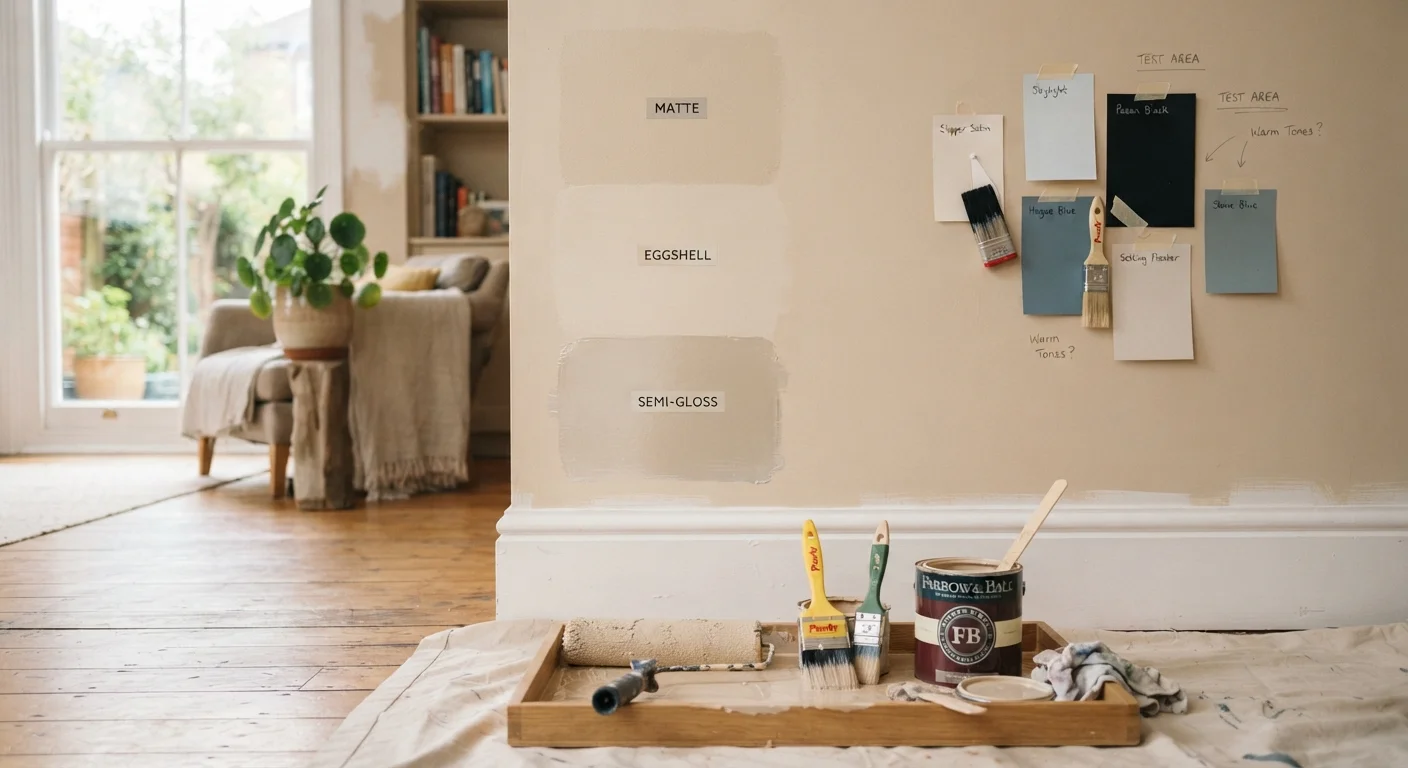
Photo credit: ProximityFinds.com | One-stop Reading Source
In this article
Flat, eggshell, satin, semi-gloss — each finish performs differently. Use this guide to match sheen level to the right wall, ceiling, or trim.
Why Paint Finish Matters More Than You Think
Most homeowners spend considerable time choosing a paint color and almost no time thinking about finish - yet finish may have a greater impact on how a room looks and holds up over time. Sheen level determines how much light a surface reflects, how easy it is to clean, and how forgiving it is of wall imperfections.
As a general rule, higher-sheen finishes are more durable and washable but amplify surface flaws. Lower-sheen finishes hide imperfections and create a soft look, but they scuff and stain more easily. Matching finish to the functional demands of each space is the key to a paint job that stays beautiful for years.
| Lowest-sheen finish | Flat / Ultra-flat |
| Best finish for high-traffic areas | Satin or Semi-gloss |
| Recommended finish for ceilings | Flat |
| Recommended finish for trim and doors | Semi-gloss or Gloss |
| Full cure time before washing | 2-4 weeks (typical) (Varies by product and conditions) |
| Number of standard sheen categories | 5-6 (varies by manufacturer) |
The Five Core Finishes: What Each One Does
Understanding the core finishes - flat, matte, eggshell, satin, semi-gloss, and gloss - helps you make confident decisions room by room.
Flat / Matte finish
The lowest-sheen paint finish, with little to no light reflection. Ideal for ceilings and low-traffic areas, it hides surface imperfections well but is difficult to clean without damaging the paint film.
Eggshell finish
A finish with a very slight, soft sheen - similar to the surface of an eggshell. It offers a step up in washability over flat paint and is popular for living rooms and bedrooms.
Satin finish
A mid-range finish with a smooth, velvety sheen that reflects moderate light. Satin is durable, easy to clean, and versatile enough for most rooms, including hallways and kitchens.
Semi-gloss finish
A noticeably shiny finish that is highly moisture-resistant and easy to wipe clean. It is the standard choice for bathrooms, kitchens, and painted trim or woodwork.
Gloss finish
The highest-sheen finish, producing a hard, reflective surface. Gloss paint is extremely durable and washable, but it highlights every surface imperfection, making careful prep essential.
Sheen level
A measure of how much light a paint surface reflects, typically expressed as a percentage of Light Reflectance Value (LRV) or a descriptive name. Higher sheen means more reflectivity and generally more durability.
Keep in mind that finish names are not fully standardized across manufacturers. One brand's "satin" may overlap with another's "pearl" or "silk." Always check the sheen percentage on the label rather than relying on the name alone.
Room-by-Room Finish Recommendations
Different rooms have different moisture levels, traffic patterns, and lighting conditions - all of which affect which finish performs best.
- Living rooms and bedrooms: Eggshell or matte finishes work well on walls. They absorb light gently, create a comfortable atmosphere, and tolerate occasional cleaning. Avoid flat paint in rooms where furniture or clothing might brush against the walls regularly.
- Kitchens: Satin or semi-gloss on walls and cabinets. These finishes stand up to steam, grease, and repeated wiping. Semi-gloss on cabinets provides extra durability where hands contact surfaces daily.
- Bathrooms: Semi-gloss is the standard choice for high-humidity spaces. It resists moisture absorption and is simple to wipe down. Satin is an acceptable alternative in half-baths with lower humidity.
- Hallways and stairwells: Satin is the workhorse finish here. It handles scuffs and hand marks from constant traffic while still looking polished.
- Ceilings: Flat or ultra-flat finishes are almost universally recommended. Ceilings rarely need cleaning, and a flat finish hides the subtle irregularities that would be magnified by any sheen.
- Trim, doors, and baseboards: Semi-gloss or gloss provides the crisp definition these architectural elements need and holds up to daily contact. A gloss finish on trim also creates a classic contrast against matte or eggshell walls.
For a broader look at how paint and surface care fit into your overall home upkeep routine, see our seasonal home maintenance checklist - it covers caulking, touch-up timing, and surface prep by season.
Primer Choice Affects Final Sheen
Using a high-sheen primer under a flat topcoat can cause the finished surface to appear uneven in certain lighting. Match your primer sheen level roughly to the topcoat, or use a dedicated flat ceiling primer when painting ceilings. Always follow the topcoat manufacturer's primer recommendations for the most predictable result.
Application Tips for a Professional Result
Even the right finish can underperform with poor preparation or application. Keep these principles in mind before you open a can.
- Clean and prime first. Grease, dust, or old flaking paint will prevent adhesion at any sheen level. A bonding primer is especially important when transitioning from a high-gloss to a low-sheen finish.
- Sand between coats on trim. Trim finishes are applied at higher sheen and show brush strokes more readily. A light sanding with fine-grit sandpaper (220 grit) between coats produces a noticeably smoother result.
- Use the right applicator. Foam rollers leave fewer texture marks on semi-gloss and gloss surfaces. Lambswool or thick-nap rollers are better suited to flat finishes on textured walls.
- Allow full cure time before washing. Paint may feel dry in hours, but full hardness - the point at which it can be safely cleaned - typically takes two to four weeks depending on the product and conditions.
2-4 weeks
Time for interior paint to fully cure
General industry guidance from paint manufacturers; actual time varies with humidity, temperature, and product formulation.
220 grit
Sandpaper recommended between trim coats
Fine-grit sanding between coats removes brush marks and improves adhesion for a smoother semi-gloss or gloss finish.

Author
Home Editorial Team
Home Editorial Team is the collective byline for our editorial team and contributor network. Articles published under this byline or an editorial pen name are researched, written, and reviewed according to our editorial standards for clarity, consistency, and independence before publication.
View all articles →