
Why Calorie Counts Don't Tell the Whole Story
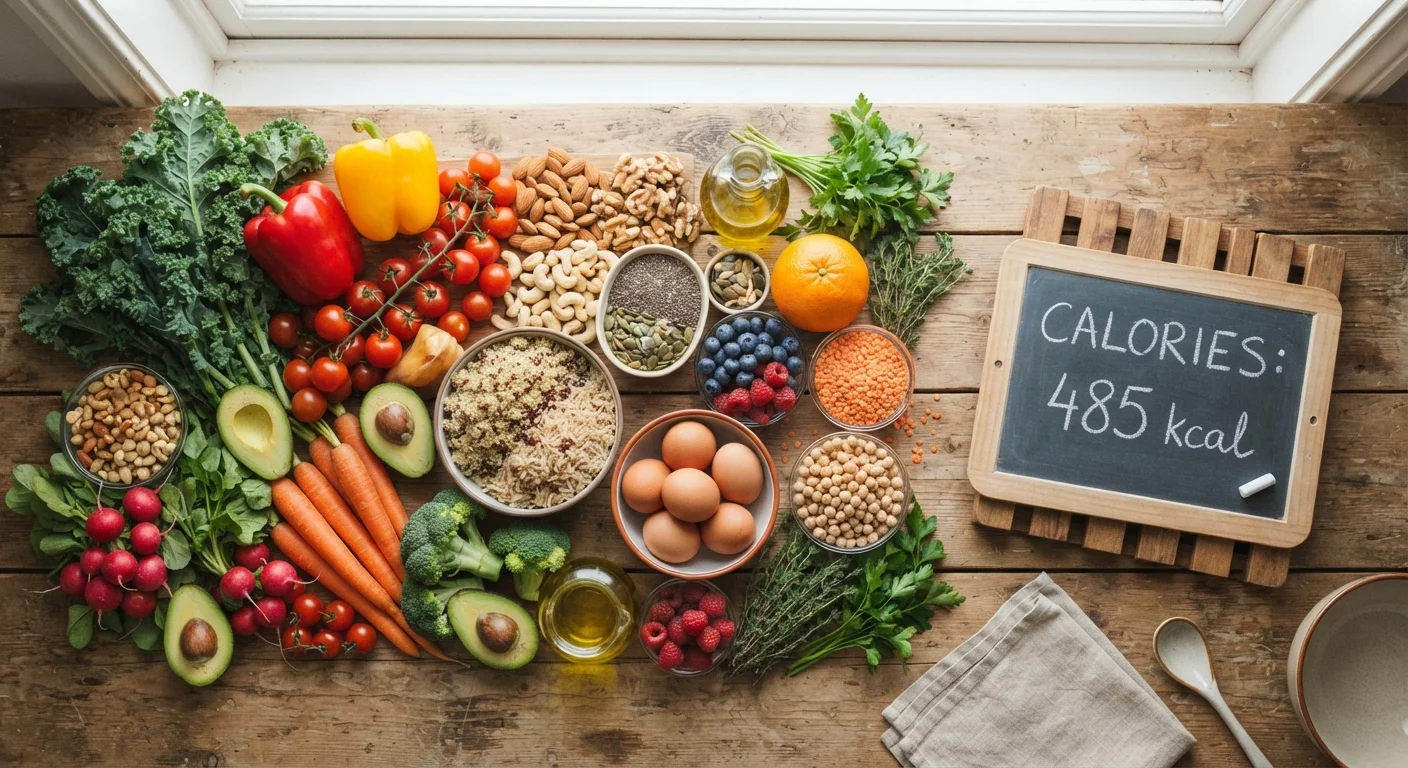
Photo credit: ProximityFinds.com | One-stop Reading Source
In this article
Calories matter, but they're just one piece of the picture. Learn what calorie counts leave out and why food quality also counts.
Key Takeaways
- Two foods with identical calorie counts can have vastly different effects on hunger, blood sugar, and nutrient intake.
- Protein, fiber, and micronutrients are not captured by a calorie number alone.
- Highly processed foods and whole foods can share calorie totals while delivering completely different nutritional value.
- Food quality influences hormones, gut health, and satiety in ways a calorie count cannot reflect.
- Reading beyond calories - including ingredients and nutrients - gives a more complete picture of what you're eating.
The Limits of a Single Number
Walk down any grocery aisle and you'll find calorie counts on nearly every package. For decades, public health messaging has treated calories as the primary lens for evaluating what we eat. But nutrition researchers have long recognized that this single figure leaves out most of what makes food nourishing - or not.
A calorie is simply a unit of energy. It tells you how much fuel a food can theoretically provide, nothing more. It does not tell you whether that food contains fiber to support digestion, protein to maintain muscle, or vitamins and minerals your body depends on. Two very different foods - a handful of almonds and a small bag of gummy candies - might land near the same calorie total while delivering entirely different nutritional experiences.
If you're just starting to think critically about what you eat, our introduction to nutrition basics provides helpful context on nutrients, food groups, and why variety matters.
57%
Share of US calories from ultra-processed foods
Research published in the journal BMJ Open estimated that ultra-processed foods accounted for approximately 57% of energy intake in the American diet, based on national dietary survey data.
~95%
Americans not meeting fiber recommendations
According to data cited by the Dietary Guidelines for Americans, dietary fiber is identified as a nutrient of public health concern, with the vast majority of Americans consuming well below recommended amounts.
What Calories Miss: Nutrient Density
Nutrient density refers to the concentration of beneficial nutrients - vitamins, minerals, fiber, antioxidants - relative to a food's calorie content. A cup of cooked lentils and a cup of white rice may be comparable in calories, but lentils provide substantially more protein, fiber, iron, and folate. Your body doesn't just need fuel; it needs the raw materials to build tissue, regulate hormones, support immunity, and maintain organ function.
Many Americans already fall short on key nutrients like fiber, vitamin D, potassium, and calcium - not because they eat too many calories, but because the overall quality of their diet leaves nutritional gaps. For a deeper look at where those gaps commonly appear, see where Americans fall short on key nutrients.
Look at the Whole Nutritional Package
When evaluating a food, scan for fiber, protein, and added sugar content alongside calories. A food high in fiber and protein relative to its calories tends to support satiety and steady energy better than one with equivalent calories but minimal nutritional substance. This quick check takes seconds and gives you far more information than the calorie line alone.
Processing, Satiety, and the Quality Dimension
Ultra-processed foods - products engineered for palatability using refined ingredients, additives, and minimal whole-food components - are a significant part of the average American diet. These foods are often calorie-dense but nutrient-poor, and growing research suggests they may undermine hunger regulation in ways that go beyond their calorie content.
Whole foods, by contrast, tend to contain fiber and protein structures that slow digestion and trigger fullness hormones more effectively. This is partly why a 400-calorie meal built around vegetables, legumes, and lean protein tends to satisfy longer than 400 calories of a processed snack - even though the math looks identical on paper.
These dynamics are part of what nutrition researchers call "food matrix" effects: the physical structure and composition of a food changes how the body absorbs and responds to its nutrients. It is one reason why eating an orange and drinking orange juice - despite similar sugar content - produce different physiological responses.
Calorie Counts Have Measurement Limits
The calorie values printed on food labels are estimates based on standardized formulas, not precise measurements for every individual food item. The FDA permits a margin of error in label calorie values, and your body's actual absorption of those calories can vary based on gut microbiome composition, food preparation methods, and individual metabolic factors. This is another reason why calorie counts should be understood as approximations, not absolute figures.
When navigating the grocery store, looking beyond the calorie number toward ingredient quality is a practical first step. The guide to grocery shopping with nutrition in mind offers a useful framework for making more informed choices at the store.
How to Use Calories Thoughtfully
None of this means calories are irrelevant. Energy balance - the relationship between calories consumed and calories expended - does play a role in body weight over time. The problem arises when calorie counts become the sole criterion for evaluating food choices, crowding out equally important considerations like food quality, meal composition, and dietary pattern.
A more practical approach treats calorie awareness as one tool among several. Paying attention to fiber content, protein, added sugars, and the degree of food processing provides a far richer picture of what a meal actually contributes to your health. Checking the Nutrition Facts label with all of these factors in mind - not just the calorie line - is a habit worth building. For a guided walkthrough of what each part of the label means, see how to read a Nutrition Facts label.
It is also worth recognizing that well-intentioned dietary habits can quietly go off track in ways that aren't obvious from calorie totals alone. Common patterns that undermine an otherwise healthy diet are explored in the traps that undermine a healthy diet.
This article is for general informational and educational purposes only and is not a substitute for professional medical or dietary advice. Consult a qualified healthcare provider or registered dietitian for guidance specific to your individual health needs.
Frequently Asked Questions

Author
Health Editorial Team
Health Editorial Team is the collective byline for our editorial team and contributor network. Articles published under this byline or an editorial pen name are researched, written, and reviewed according to our editorial standards for clarity, consistency, and independence before publication.
View all articles →