
The Pros and Cons of Mental Health Apps as a Self-Care Tool
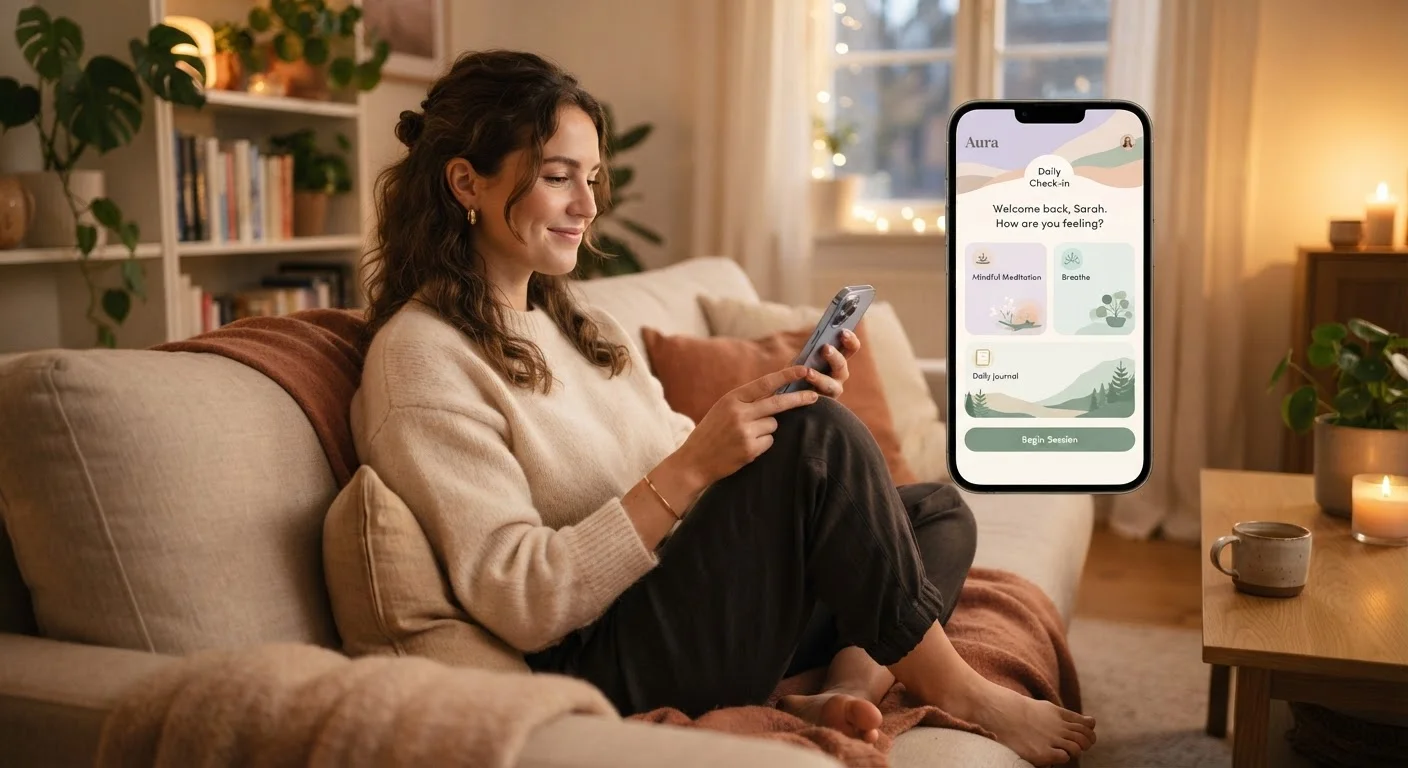
Photo credit: ProximityFinds.com | One-stop Reading Source
In this article
Mental health apps offer accessibility and convenience, but they have real limitations too. Here's a balanced look at what they can and can't do.
Key Takeaways
- Mental health apps can improve access to self-care tools for people who face cost or scheduling barriers.
- Most apps are not clinically validated and should not replace professional mental health treatment.
- Privacy and data security practices vary widely across mental health apps.
- Apps work best as a complement to - not a substitute for - evidence-based professional care.
- Features like mood tracking and guided meditation have some research support for general well-being.
Available anytime, removing scheduling barriers
Apps can be accessed at any hour without appointments, making support available during moments of stress that fall outside office hours.
Low or no cost compared to therapy
Many apps offer free tiers or low monthly fees, significantly reducing the financial barrier compared to weekly therapy sessions, which can cost $100-$300 per hour without insurance.
Reduces stigma through private, anonymous use
Using an app privately at home can feel less intimidating than seeking in-person help, potentially serving as a first step toward engaging with mental health support.
Mood and habit tracking builds self-awareness
Logging emotions and behaviors over time can surface patterns that users and their providers may find useful in identifying stress triggers or tracking progress.
Structured access to evidence-adjacent techniques
Some apps deliver breathing exercises, CBT-style thought records, and mindfulness prompts that are grounded in techniques studied in clinical research, even if the apps themselves are rarely validated independently.
Most apps lack rigorous clinical evidence
A 2019 analysis published in the journal World Psychiatry found that the majority of mental health apps on the market have not been tested in randomized controlled trials, meaning their effectiveness for most users is unproven.
Not equipped to handle clinical mental illness
Apps are generally designed for general well-being, not for managing diagnosable conditions such as major depressive disorder, PTSD, or bipolar disorder, which require professional clinical assessment and care.
Significant data privacy and security risks
Investigations by privacy researchers have found that many mental health apps share user data with third parties, including advertisers, often without clear disclosure in their privacy policies.
Risk of substituting apps for professional care
Relying on an app when professional help is genuinely needed can delay appropriate treatment, potentially allowing a condition to worsen before the person seeks qualified support.
Engagement drops sharply after initial download
Research on digital health tools consistently shows that most users disengage within days to weeks, limiting the potential long-term benefit of even well-designed apps.
Quality and accuracy vary with no standard oversight
Unlike medications or medical devices, mental health apps are largely unregulated, meaning there is no consistent requirement that content be reviewed or approved by mental health professionals before publication.
What Mental Health Apps Actually Are
Mental health apps are smartphone-based tools designed to support psychological well-being through features such as guided meditation, mood journaling, breathing exercises, cognitive behavioral therapy (CBT)-inspired prompts, and sleep tracking. They range from standalone mindfulness timers to structured programs modeled loosely on therapeutic techniques.
It's worth being clear about what most of these tools are not: they are not licensed therapists, diagnostic instruments, or medical devices. To understand the broader vocabulary used to describe these tools and conditions, our plain-language mental health glossary is a useful starting point.
The market has grown substantially - thousands of mental health apps are now available across major app stores - but the quality, evidence base, and data practices behind them vary enormously.
The Advantages of Mental Health Apps
Despite their limitations, mental health apps offer several genuine benefits worth considering.
Available anytime, removing scheduling barriers
Apps can be accessed at any hour without appointments, making support available during moments of stress that fall outside office hours.
Low or no cost compared to therapy
Many apps offer free tiers or low monthly fees, significantly reducing the financial barrier compared to weekly therapy sessions, which can cost $100-$300 per hour without insurance.
Reduces stigma through private, anonymous use
Using an app privately at home can feel less intimidating than seeking in-person help, potentially serving as a first step toward engaging with mental health support.
Mood and habit tracking builds self-awareness
Logging emotions and behaviors over time can surface patterns that users and their providers may find useful in identifying stress triggers or tracking progress.
Structured access to evidence-adjacent techniques
Some apps deliver breathing exercises, CBT-style thought records, and mindfulness prompts that are grounded in techniques studied in clinical research, even if the apps themselves are rarely validated independently.
10,000+
Mental health apps available in major app stores
Estimates from app store analyses suggest tens of thousands of apps now carry a mental health or wellness label, though clinical validation remains rare.
~20%
Adults with mental illness who receive treatment
According to SAMHSA's National Survey on Drug Use and Health, roughly one in five U.S. adults with a mental illness reported receiving treatment, highlighting the access gap apps aim to address.
Apps that incorporate mindfulness or breathing techniques draw on practices with a growing research base. For more on how mindfulness works as a standalone practice, see our guide on mindfulness vs. meditation.
The Disadvantages Worth Knowing
Mental health apps also carry meaningful limitations that users should weigh carefully before relying on them.
Most apps lack rigorous clinical evidence
A 2019 analysis published in the journal World Psychiatry found that the majority of mental health apps on the market have not been tested in randomized controlled trials, meaning their effectiveness for most users is unproven.
Not equipped to handle clinical mental illness
Apps are generally designed for general well-being, not for managing diagnosable conditions such as major depressive disorder, PTSD, or bipolar disorder, which require professional clinical assessment and care.
Significant data privacy and security risks
Investigations by privacy researchers have found that many mental health apps share user data with third parties, including advertisers, often without clear disclosure in their privacy policies.
Risk of substituting apps for professional care
Relying on an app when professional help is genuinely needed can delay appropriate treatment, potentially allowing a condition to worsen before the person seeks qualified support.
Engagement drops sharply after initial download
Research on digital health tools consistently shows that most users disengage within days to weeks, limiting the potential long-term benefit of even well-designed apps.
Quality and accuracy vary with no standard oversight
Unlike medications or medical devices, mental health apps are largely unregulated, meaning there is no consistent requirement that content be reviewed or approved by mental health professionals before publication.
A Note on App Regulation in the U.S.
The FDA has authority over a narrow category of software classified as medical devices, but the vast majority of consumer mental health apps fall outside this regulatory scope. This means most apps on the market have not been reviewed for clinical accuracy or safety by any government body. When evaluating an app, look for published peer-reviewed research on that specific product, transparent privacy policies, and input from licensed mental health professionals in its development.
It's also worth considering the broader relationship between screen-based tools and mental well-being. Research on this topic is nuanced - our article on social media and mental health examines what the evidence actually shows.
How to Use Apps as Part of a Broader Self-Care Strategy
The most constructive way to approach mental health apps is as one component of a layered self-care approach - not as a primary or sole intervention. Think of them as useful daily habit supports rather than treatment.
Pairing app use with structured self-reflection can amplify its value. A weekly emotional well-being check-in is one practical way to assess whether your routine, including any apps you use, is actually working for you.
For a fuller view of the dimensions that contribute to mental wellness - including sleep, stress, and social health - the full picture on mental wellness offers a comprehensive framework.
If you are experiencing symptoms of depression, anxiety, or any other mental health condition, please consult a qualified healthcare professional. Apps are not a substitute for clinical evaluation or treatment.
This article is for general informational and educational purposes only and is not a substitute for professional medical or mental health advice, diagnosis, or treatment. Always seek the guidance of a qualified healthcare provider with any questions you may have about a mental health condition.

Author
Health Editorial Team
Health Editorial Team is the collective byline for our editorial team and contributor network. Articles published under this byline or an editorial pen name are researched, written, and reviewed according to our editorial standards for clarity, consistency, and independence before publication.
View all articles →