
Mindfulness vs. Meditation: Two Related Practices Worth Telling Apart
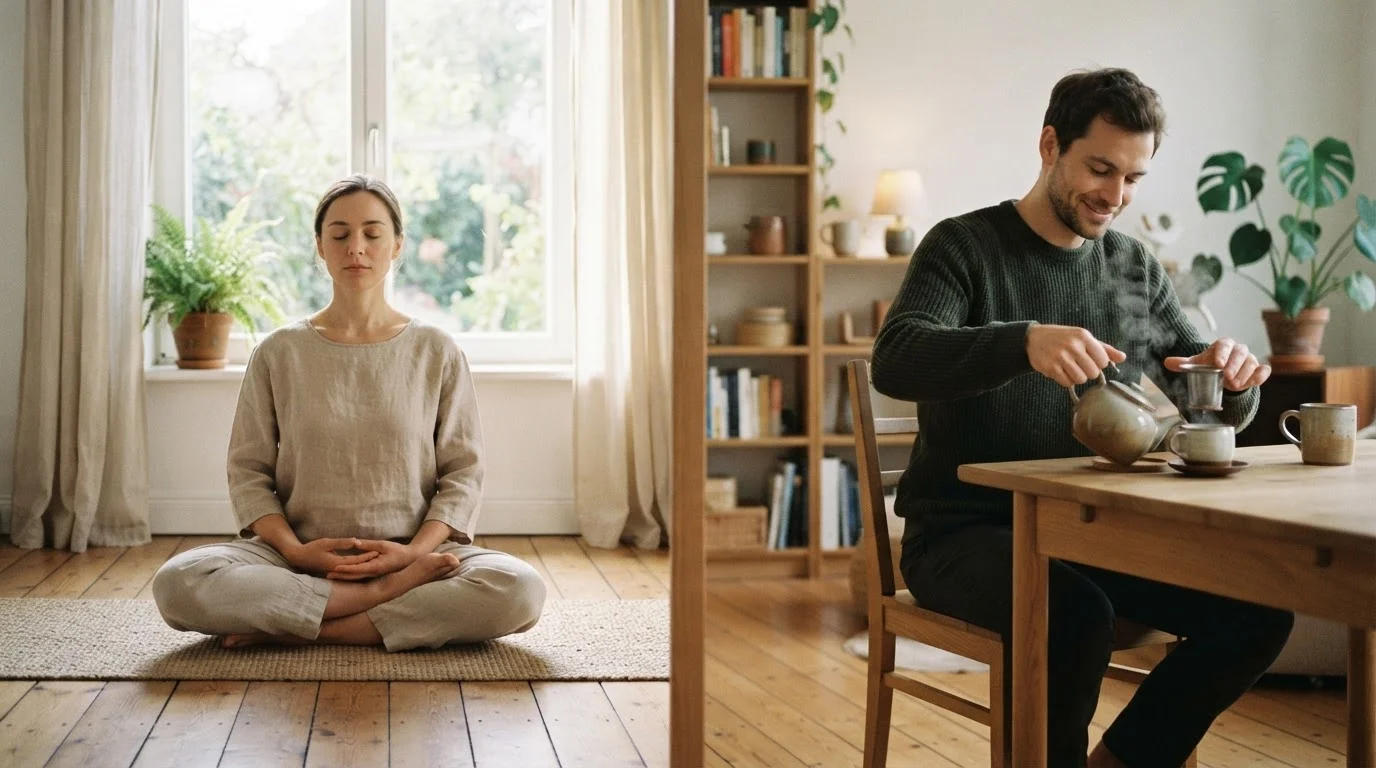
Photo credit: ProximityFinds.com | One-stop Reading Source
In this article
Mindfulness and meditation are often used interchangeably, but they aren't the same thing. Here's how each works and when to use which.
Key Takeaways
- Mindfulness is a quality of awareness; meditation is a formal practice used to cultivate it.
- You can be mindful anytime - while eating, walking, or working - without sitting down to meditate.
- Meditation sessions are deliberate, time-bound exercises that often build mindfulness over time.
- Both practices have credible research support for reducing stress, anxiety, and improving focus.
- They complement each other well, but neither replaces professional mental health care when needed.
The Core Distinction: State vs. Practice
The confusion between mindfulness and meditation is understandable - they overlap, they're often taught together, and both appear frequently in mental wellness conversations. But treating them as identical misses something important about how each actually works.
Mindfulness is a mental quality: the intentional, non-judgmental awareness of what is happening right now. It is something you can bring to virtually any moment - a conversation, a meal, a commute. You don't need a cushion, an app, or a quiet room. Mindfulness is a way of paying attention.
Meditation, by contrast, is a formal practice - a structured activity you set aside time to do. Many types of meditation cultivate mindfulness (hence the overlap), but others focus on different goals: relaxation, visualization, compassion, or concentration. Meditation is essentially a training session; mindfulness is one skill that training can develop.
A useful analogy: mindfulness is to meditation what fitness is to going to the gym. The gym builds fitness, but fitness also shows up when you take the stairs. One supports the other, but they aren't the same thing. Just as stretching and mobility are distinct but related concepts, mindfulness and meditation are related but serve different functions.
How Each Practice Works
| Criterion | Mindfulness | Meditation |
|---|---|---|
| What it is | A quality of present-moment awareness | A structured, deliberate mental practice |
| When you do it | Anytime, during any activity | During dedicated, scheduled sessions |
| Setup required | None - no tools or posture needed | Quiet time, often a guided method or timer |
| Primary goal | Present-moment awareness and reduced reactivity | Mental training - focus, calm, compassion, or insight |
| Time commitment | Moments integrated into daily life | Typically 10-30 minute sessions |
| Research support | Growing evidence for stress and attention benefits | Substantial research base, especially MBSR programs |
| Best entry point | Paying attention to one routine task fully | A short guided breathing or body-scan session |
Mindfulness in everyday life typically involves noticing sensory details, observing thoughts without reacting to them, or returning attention to the present moment when the mind wanders. It requires no special posture or timing - it fits into existing routines.
Meditation sessions, on the other hand, involve deliberately setting aside time - commonly 10 to 30 minutes - to engage in a structured mental exercise. Common forms include:
- Focused attention meditation: Concentrating on a single object, often the breath, and gently redirecting attention when it drifts.
- Open monitoring meditation: Observing all thoughts, sensations, and feelings as they arise without attachment - closely aligned with mindfulness.
- Loving-kindness (metta) meditation: Systematically cultivating compassion toward oneself and others.
- Body scan: Methodically directing attention through different parts of the body, often used for relaxation and stress relief.
Research published in journals such as JAMA Internal Medicine and Psychological Science suggests that regular meditation practice - particularly mindfulness-based programs - is associated with reductions in self-reported stress, anxiety symptoms, and improvements in attention. Results vary by individual, and findings are still evolving. Mental health apps can support these practices with guided sessions; for a balanced look at their capabilities and limits, see what mental health apps can and can't do.
Using Both - and Knowing Their Limits
47%
Time minds wander from the present task
A Harvard study using experience-sampling found that people's minds wander nearly half the time during waking hours, regardless of what they are doing.
8 weeks
Duration of standard MBSR programs
Mindfulness-Based Stress Reduction, developed at the University of Massachusetts, is typically an eight-week structured course that combines meditation and mindfulness exercises.
~200+
Randomized trials on mindfulness-based interventions
A 2014 meta-analysis in JAMA Internal Medicine reviewed over 18,000 citations and identified more than 200 randomized trials evaluating mindfulness programs for various health outcomes.
The two practices work best as complements. A regular meditation habit can make informal mindfulness easier - you become more practiced at noticing when attention wanders. Conversely, bringing mindful awareness into daily life reinforces the skills built during formal sessions.
That said, neither practice is a substitute for professional care. If you are managing significant anxiety, depression, trauma, or other mental health conditions, self-guided mindfulness or meditation should be seen as supportive tools - not primary treatments. A qualified therapist or counselor can help you determine what role these practices might appropriately play alongside evidence-based care. It may also help to understand the differences between therapy, coaching, and counseling so you can seek the right kind of professional support.
For most people, starting small is sensible. Even brief, informal mindfulness moments - pausing to notice your breath before a meeting, or eating one meal without screen distractions - can gradually build the awareness that more formal meditation deepens. There is no single correct entry point; the goal is finding an approach that fits your life and that you can sustain over time.
This article is for general informational purposes only and does not constitute medical or mental health advice. Consult a qualified healthcare professional for guidance specific to your situation.

Author
Health Editorial Team
Health Editorial Team is the collective byline for our editorial team and contributor network. Articles published under this byline or an editorial pen name are researched, written, and reviewed according to our editorial standards for clarity, consistency, and independence before publication.
View all articles →