
Good Debt vs. Bad Debt: A Distinction Worth Understanding
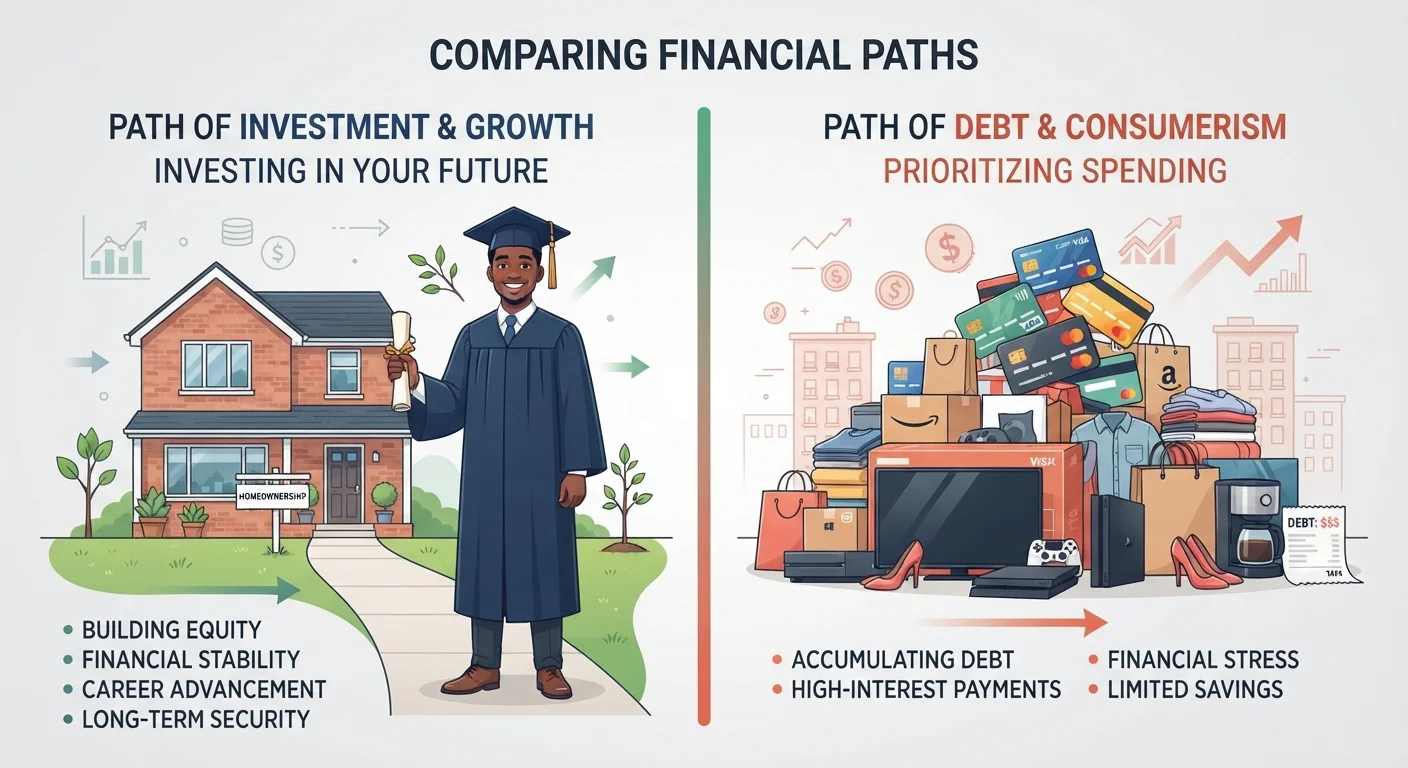
Photo credit: ProximityFinds.com | One-stop Reading Source
In this article
Not all debt is created equal. Understand the difference between debt that can build wealth and debt that typically drains it.
Key Takeaways
- Good debt typically finances assets that appreciate in value or increase earning potential.
- Bad debt generally funds depreciating items or consumption, with high interest costs.
- The interest rate on a debt is one of the clearest indicators of whether it is working for or against you.
- Even "good" debt can become problematic when taken on in excess or at unfavorable terms.
- Understanding this distinction helps you prioritize which debts to pay down aggressively.
Why the Distinction Matters
Americans collectively carry trillions of dollars in debt across mortgages, student loans, auto loans, and credit cards. Treating all of that debt as equally urgent - or equally harmful - can lead to poor prioritization and missed financial opportunities. The good-debt-versus-bad-debt framework gives consumers a practical lens for deciding where to focus their repayment energy and when carrying a balance may actually be acceptable.
At its core, the distinction comes down to two questions: What did the debt finance? And what does the borrowing cost relative to the potential return? Debt that funds an asset likely to grow in value, or that expands your earning capacity, generally earns the "good" label. Debt that funds consumption - things that lose value immediately or provide no lasting financial return - typically qualifies as "bad."
Good Debt Is Not Risk-Free
Even debt that fits the "good" category can become a burden if taken on in excessive amounts, at unfavorable terms, or without a clear plan for repayment. A mortgage on a home you cannot comfortably afford is not automatically good debt. Context, amount, and your overall financial stability all factor into whether any borrowing actually serves you.
This is general financial education, not personalized advice. For guidance specific to your debt situation, consult a licensed financial professional.
What Makes Debt "Good"
The most commonly cited examples of good debt are mortgages, federal student loans used for career-advancing education, and in some cases small business loans. Each shares a key characteristic: the borrowing finances something with a meaningful potential return.
- Mortgages: Real estate has historically appreciated over long time horizons, and monthly payments build equity rather than simply spending money. Interest rates on mortgages are also typically lower than other borrowing options.
- Student loans: A degree that significantly raises lifetime earning potential can justify the cost of borrowing - provided the loan balance is proportionate to expected earnings in that field.
- Business loans: Capital invested in a productive business can generate returns that exceed the cost of the loan itself.
Interest rates matter enormously here. Good debt almost always carries a relatively low rate, which limits the drag on your finances over time. If you're weighing whether paying down a low-rate loan early makes sense, our article on draining savings to pay off debt explores those tradeoffs in depth.
A Simple Rule of Thumb for Rate Comparison
If the interest rate on a debt is lower than the long-run average return you might expect from a diversified investment portfolio, you may be better off making scheduled payments rather than paying the debt off early. This is not a guarantee - investment returns vary and are not assured - but it is a useful starting point for thinking about where to allocate extra dollars. Speak with a licensed financial adviser to apply this logic to your specific circumstances.
What Makes Debt "Bad"
Bad debt tends to share three characteristics: a high interest rate, financing for something that depreciates quickly, and no meaningful contribution to future earning power or net worth. Credit card balances carried month to month are the clearest example - average credit card APRs regularly exceed 20%, meaning the cost of financing a purchase can dwarf the purchase price itself over time.
Other common examples include payday loans, high-rate personal loans used for vacations or luxury goods, and financing consumer electronics at steep rates. Auto loans occupy a middle ground - transportation has practical necessity, but vehicles depreciate rapidly, and high-rate auto financing can leave borrowers "underwater" (owing more than the car is worth).
20%+
Average credit card APR in recent years
According to Federal Reserve consumer credit data, average credit card interest rates have exceeded 20% in recent periods - a key reason revolving balances are widely classified as bad debt.
$1.7T
Total U.S. student loan debt outstanding
Federal Reserve data indicates total outstanding student loan debt in the U.S. surpasses $1.7 trillion, underscoring the importance of distinguishing between productive and burdensome educational borrowing.
3-7%
Typical 30-year fixed mortgage rate range (historical average)
Long-run historical mortgage rates in the U.S. have generally ranged from 3% to 7% over extended periods, illustrating why mortgage debt is considered among the lower-cost borrowing options available to consumers.
For a closer look at widely held beliefs about debt that can actually cost you money, see our piece on common myths about paying off debt.
Putting the Framework to Work
Once you can categorize your debts, you can act more strategically. High-interest bad debt typically warrants aggressive payoff - two structured approaches, the debt avalanche and debt snowball, are worth understanding. Our guide on the debt avalanche and debt snowball walks through how each method works and what each one costs over time.
For good debt held at a low interest rate, the calculus is different. Minimum or scheduled payments may be entirely appropriate while you direct extra dollars toward an emergency fund or other financial goals. Building that cushion reduces the likelihood you'll need to take on new high-interest debt when something unexpected happens - a car repair, a medical bill, a job gap.
If managing multiple debts feels unwieldy, debt consolidation is one option worth understanding - though it comes with its own tradeoffs. And if certain habits are quietly slowing your progress, reviewing financial habits that undermine debt payoff can surface patterns you may not have noticed.
“The question is never simply whether you have debt, but whether the debt you carry is building your future or quietly eroding it. Interest rate and purpose are the two lenses that matter most.”
— Finance Editorial Team, Editorial Staff, Consumer Finance
This article is for informational and educational purposes only and does not constitute personalized financial or investment advice. Consult a qualified financial professional before making decisions about your specific situation.
Frequently Asked Questions

Author
Finance Editorial Team
Finance Editorial Team is the collective byline for our editorial team and contributor network. Articles published under this byline or an editorial pen name are researched, written, and reviewed according to our editorial standards for clarity, consistency, and independence before publication.
View all articles →