
Index Funds vs. Actively Managed Funds: A Structural Comparison
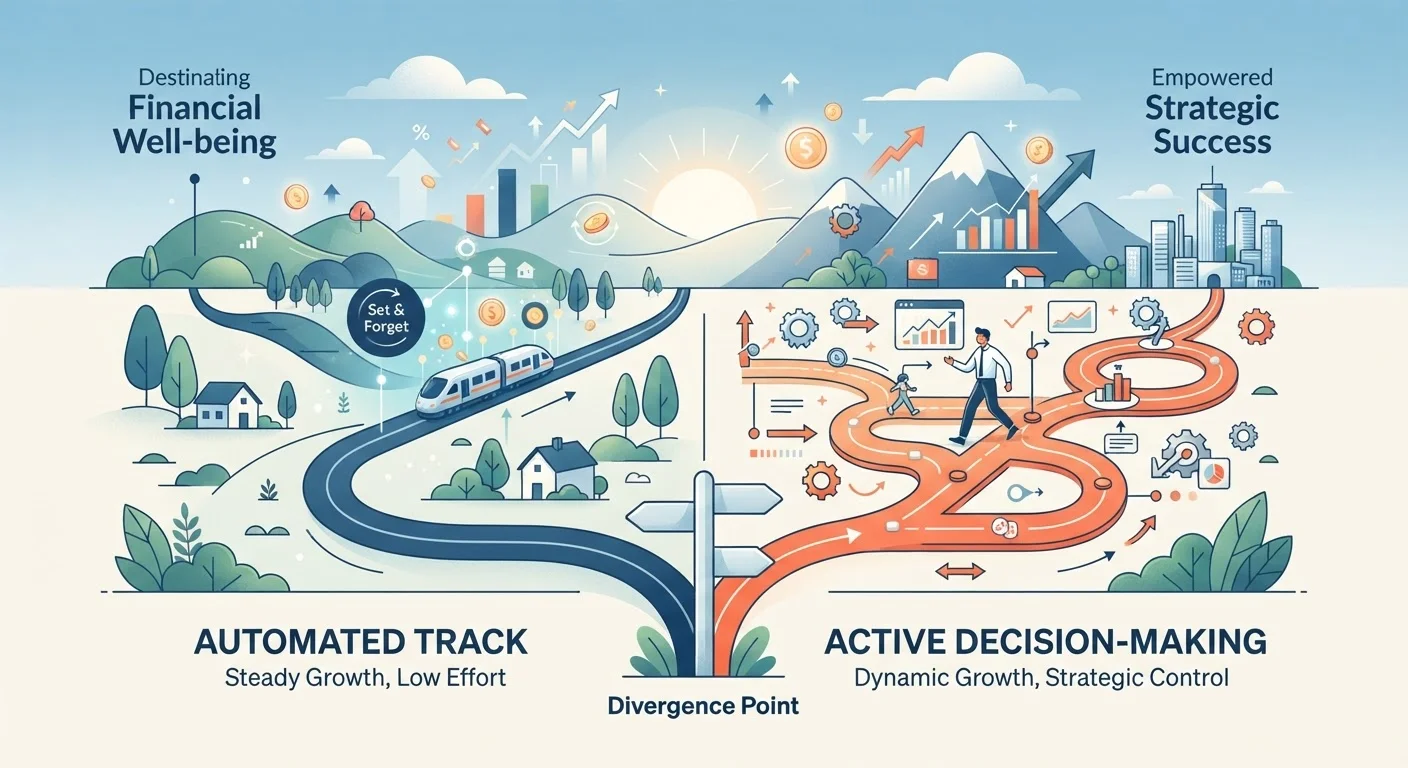
Photo credit: ProximityFinds.com | One-stop Reading Source
In this article
Passive and active fund strategies differ in cost, management style, and historical outcomes. Understand the tradeoffs before choosing.
Key Takeaways
- Index funds passively track a market index, while actively managed funds rely on managers making investment decisions.
- Cost is a key differentiator - index funds typically carry significantly lower expense ratios than active funds.
- Research consistently shows most actively managed funds underperform their benchmark index over long periods.
- Neither approach is universally superior - the right choice depends on your goals, timeline, and cost tolerance.
- Both fund types carry market risk; diversification does not eliminate the possibility of loss.
What Separates These Two Fund Structures
At their core, index funds and actively managed funds differ in one fundamental way: who - or what - decides which securities the fund holds.
An index fund is designed to mirror the composition and performance of a specific market index, such as the S&P 500 or the Total Stock Market Index. The fund holds the same securities as the index, in the same proportions, and rebalances mechanically when the index changes. No fund manager is making judgment calls about which stocks to buy or sell.
An actively managed fund takes the opposite approach. A portfolio manager - supported by a research team - selects securities based on analysis, forecasts, and strategy. The goal is to outperform a designated benchmark index by making smarter investment decisions than the broader market reflects.
This structural difference cascades into meaningful distinctions in cost, tax efficiency, and historical performance. Understanding those distinctions is essential for any investor evaluating their options. For a broader context on what underlies these funds, see our breakdown of stocks and bonds.
| Criterion | Index Funds | Actively Managed Funds |
|---|---|---|
| Management style | Passive - tracks an index | Active - manager-directed |
| Typical expense ratio | Very low (often under 0.10%) | Higher (often 0.50%-1.00%+) |
| Portfolio turnover | Low | Higher |
| Tax efficiency | Generally higher | Generally lower |
| Return objective | Match benchmark index | Outperform benchmark index |
| Historical benchmark outperformance | Matches market by design | Most underperform over long term |
| Transparency | High - holdings mirror index | Varies - holdings may change often |
The Cost Gap and Why It Matters
Expense ratios - the annual fee a fund charges as a percentage of assets - are where the structural difference becomes most tangible. Index funds, because they require no active research team or frequent trading decisions, consistently carry lower expense ratios than their actively managed counterparts.
According to Morningstar's annual fund fee study, the asset-weighted average expense ratio for passive funds has consistently been a fraction of that for active funds. While figures shift year to year, the gap is typically measured in tenths of a percentage point - which, compounded over decades, can translate into thousands of dollars of difference in long-term outcomes.
~85%
Active large-cap funds underperforming S&P 500
According to the S&P SPIVA U.S. Scorecard, roughly 85% of actively managed large-cap funds have underperformed the S&P 500 over a 15-year period.
0.03%-0.10%
Typical index fund expense ratio range
Many broad-market index funds carry expense ratios well below 0.10%, compared to 0.50%-1.00%+ for many actively managed equivalents, per Morningstar fee research.
1%+
Potential long-term cost drag from higher fees
A 1% annual fee difference, compounded over 30 years, can reduce a portfolio's ending value by roughly 25%, illustrating why cost matters significantly over time.
Active funds also tend to trade securities more frequently, which can generate higher capital gains distributions and potentially larger tax obligations in taxable accounts. Index funds, by contrast, trade only when the underlying index changes, resulting in lower portfolio turnover and often greater tax efficiency.
These cost dynamics are directly relevant to foundational principles that long-term investors tend to follow, where minimizing costs is frequently cited as one of the highest-leverage decisions an investor can make.
Performance: What the Evidence Suggests
The investment industry has long debated whether active management can reliably deliver superior returns after fees. The research, while not absolute, leans in a clear direction.
S&P Dow Jones Indices publishes the SPIVA (S&P Indices Versus Active) scorecard, which compares actively managed funds against their benchmark indices. Across multiple time horizons and fund categories, the majority of active funds have historically underperformed their benchmarks after fees - with the gap widening over longer periods.
This does not mean active management never adds value. Some managers have outperformed over extended periods, and certain market environments - periods of high volatility or in less-efficient market segments - may offer more opportunity for skilled active management. The challenge for investors is identifying outperforming managers in advance, which research suggests is difficult to do consistently.
Index funds, by design, deliver returns that closely match the market - neither significantly better nor worse. For many investors, capturing reliable market-rate returns at low cost is a rational and historically sound approach. This ties directly into how asset allocation shapes overall portfolio outcomes, since the fund types you select interact with your broader allocation strategy.
Pairing either fund type with a consistent contribution strategy - such as dollar-cost averaging - can help reduce the impact of market timing on long-term results.
Neither Fund Type Eliminates Market Risk
Both index funds and actively managed funds are subject to market risk - when markets decline broadly, most funds will decline in value as well. Index funds do not protect against market downturns; they are designed to reflect them. Active funds may or may not reduce downside exposure depending on manager strategy, but there is no guarantee of capital preservation in either case. Diversification across asset classes remains a key risk-management tool, separate from the passive-versus-active question.
This article is for general informational and educational purposes only, and does not constitute personalized investment, tax, or financial advice. Investing involves risk, including the possible loss of principal. Past performance does not guarantee future results. Consult a qualified financial professional before making investment decisions.

Author
Finance Editorial Team
Finance Editorial Team is the collective byline for our editorial team and contributor network. Articles published under this byline or an editorial pen name are researched, written, and reviewed according to our editorial standards for clarity, consistency, and independence before publication.
View all articles →