
Diversification: What It Actually Protects You From (and What It Doesn't)
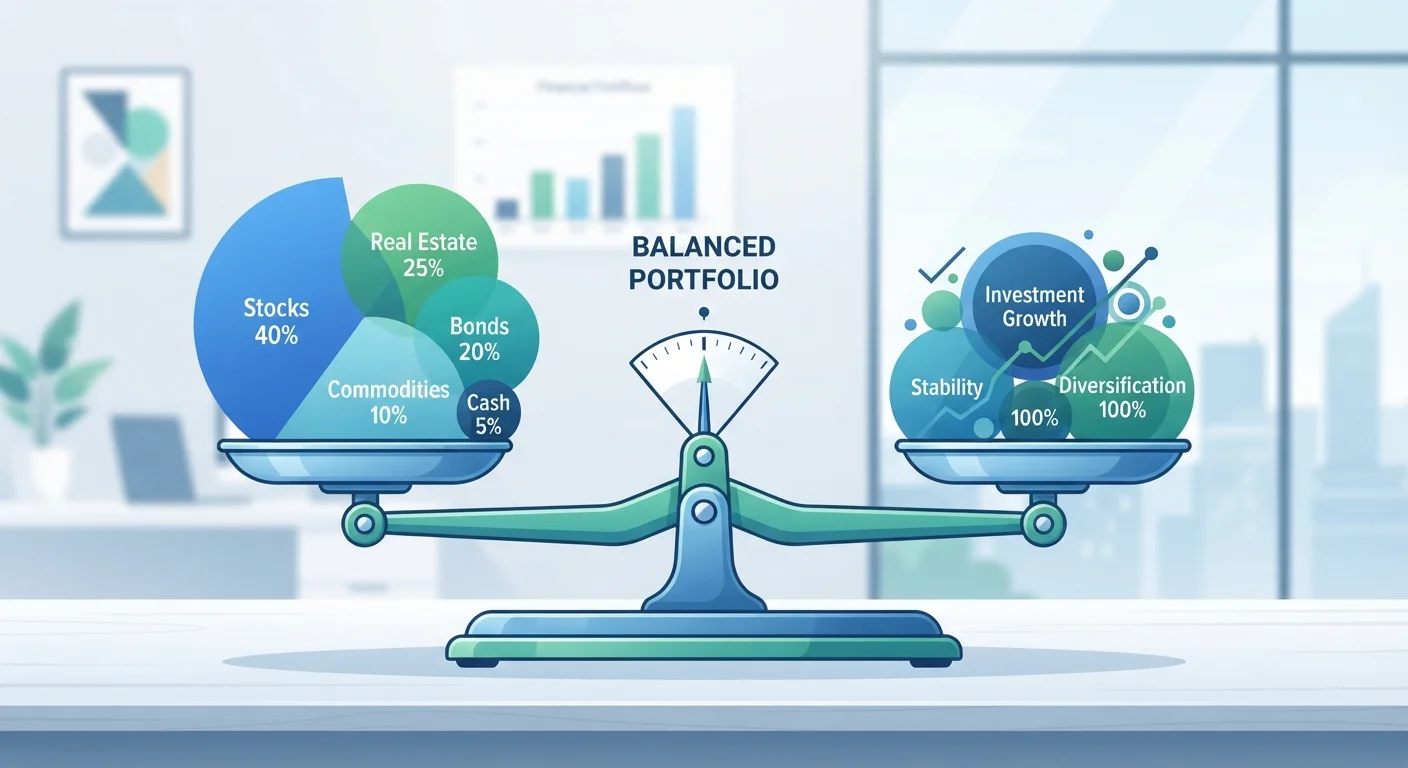
Photo credit: ProximityFinds.com | One-stop Reading Source
In this article
Spreading investments across assets reduces certain risks — but not all of them. A clear look at how diversification works in practice.
Key Takeaways
- Diversification reduces company-specific and sector-specific risk, but not overall market risk.
- Owning many assets in the same category offers less protection than spreading across genuinely different asset types.
- A portfolio can be technically diversified yet still highly vulnerable to economic downturns or rising interest rates.
- True diversification spans asset classes, sectors, and sometimes geographies.
- Diversification manages risk - it does not eliminate it or guarantee returns.
The Two Types of Risk Diversification Addresses
Every investment carries two broad categories of risk. The first is unsystematic risk - risk tied to a specific company, industry, or sector. If a single retailer files for bankruptcy, investors concentrated in that stock suffer disproportionately. The second is systematic risk, also called market risk - the kind that moves through the entire economy and affects virtually all assets at once.
Diversification is highly effective against the first type and largely powerless against the second. When you hold dozens of stocks across multiple industries, one company's collapse doesn't sink your portfolio. But when the broader economy contracts sharply, most assets decline together regardless of how spread out your holdings are.
Understanding this distinction matters because many investors assume diversification is a near-complete solution to investment risk. It isn't - it's a targeted tool with clear boundaries.
Correlation Is the Key Variable
The diversification benefit you receive depends on how independently your holdings move relative to each other - a measure called correlation. Assets with low or negative correlation to one another provide the most meaningful diversification. Over time, correlations between global asset classes have generally increased, which is why broad diversification is somewhat less powerful today than it was in earlier decades.
What Counts as Real Diversification
Not all diversification is created equal. Owning 50 different technology stocks feels diversified, but it's really concentrated exposure to a single sector. When the tech sector corrects, all 50 positions move in the same direction. This is sometimes called false diversification - the appearance of spread without genuine risk reduction.
Meaningful diversification typically spans three dimensions:
- Asset classes: Stocks, bonds, real estate investment trusts (REITs), and cash instruments behave differently under economic conditions.
- Sectors and industries: Healthcare, energy, consumer staples, and financials respond differently to interest rates, inflation, and growth cycles.
- Geography: International and domestic markets don't always move in lockstep, though correlations have increased over time as global economies have become more interconnected.
For a deeper look at how these dimensions interact at the portfolio level, see our guide to asset allocation, which covers how to balance risk across different holdings.
~20-30
Stocks needed to capture most equity diversification benefit
Academic research in portfolio theory, including foundational work by Edwin Elton and Martin Gruber, suggests most unsystematic risk is eliminated with 20-30 well-chosen, uncorrelated stocks.
2
Distinct risk types diversification addresses vs. doesn't
Modern Portfolio Theory distinguishes unsystematic risk (reducible through diversification) from systematic risk (market-wide risk that diversification cannot eliminate).
What Diversification Won't Protect You From
Systematic risks are the ones diversification can't neutralize. These include:
- Broad market downturns: A recession or financial crisis typically pulls down equities, corporate bonds, and real estate simultaneously.
- Interest rate changes: Rising rates generally reduce the value of existing bonds and can put pressure on stocks - affecting both asset classes at once.
- Inflation: High inflation erodes the real value of cash holdings and many fixed-income investments across the board.
- Currency risk: For international holdings, broad currency shifts affect entire geographic allocations at once.
A well-diversified portfolio can still experience significant short-term losses during these conditions. The protection diversification provides is relative, not absolute - it's about reducing the depth and volatility of losses compared to a concentrated portfolio, not preventing them entirely.
“Diversification is the only free lunch in investing - but even a free lunch has limits. It eliminates the risk you don't need to take, while leaving you exposed to the risk the market itself carries.”
— Harry Markowitz, Nobel Prize-winning economist and developer of Modern Portfolio Theory
Putting Diversification into Practice
For everyday investors, diversification is most practically achieved through broadly held funds - index funds or exchange-traded funds (ETFs) that track the performance of hundreds or thousands of underlying securities. A single broad-market index fund, for example, provides immediate exposure across sectors and company sizes without requiring active management decisions.
The right level of diversification also depends on factors specific to your situation. Your timeline, income stability, and how much volatility you can stomach financially and emotionally all shape how aggressively or conservatively you should spread holdings. Our article on risk tolerance vs. risk capacity explains why those two concepts aren't interchangeable and why both matter for portfolio decisions.
If you're still building toward investing readiness, the financial readiness checklist walks through the foundational steps - emergency fund, debt management, income stability - that should precede putting money into any market.
Check for Hidden Concentration in Your Portfolio
If you hold multiple funds, review their underlying holdings. Two or three popular index funds can overlap significantly, giving you the appearance of diversification while actually concentrating exposure in the same large-cap companies. Many brokerage platforms offer tools to show portfolio overlap.
This article is for general informational purposes only and does not constitute personalized investment, financial, or tax advice. Consult a qualified financial adviser before making decisions about your own portfolio.
Frequently Asked Questions

Author
Finance Editorial Team
Finance Editorial Team is the collective byline for our editorial team and contributor network. Articles published under this byline or an editorial pen name are researched, written, and reviewed according to our editorial standards for clarity, consistency, and independence before publication.
View all articles →