
Why Your Car Pulls, Shakes, or Drifts: Wheel Alignment and Balance Explained
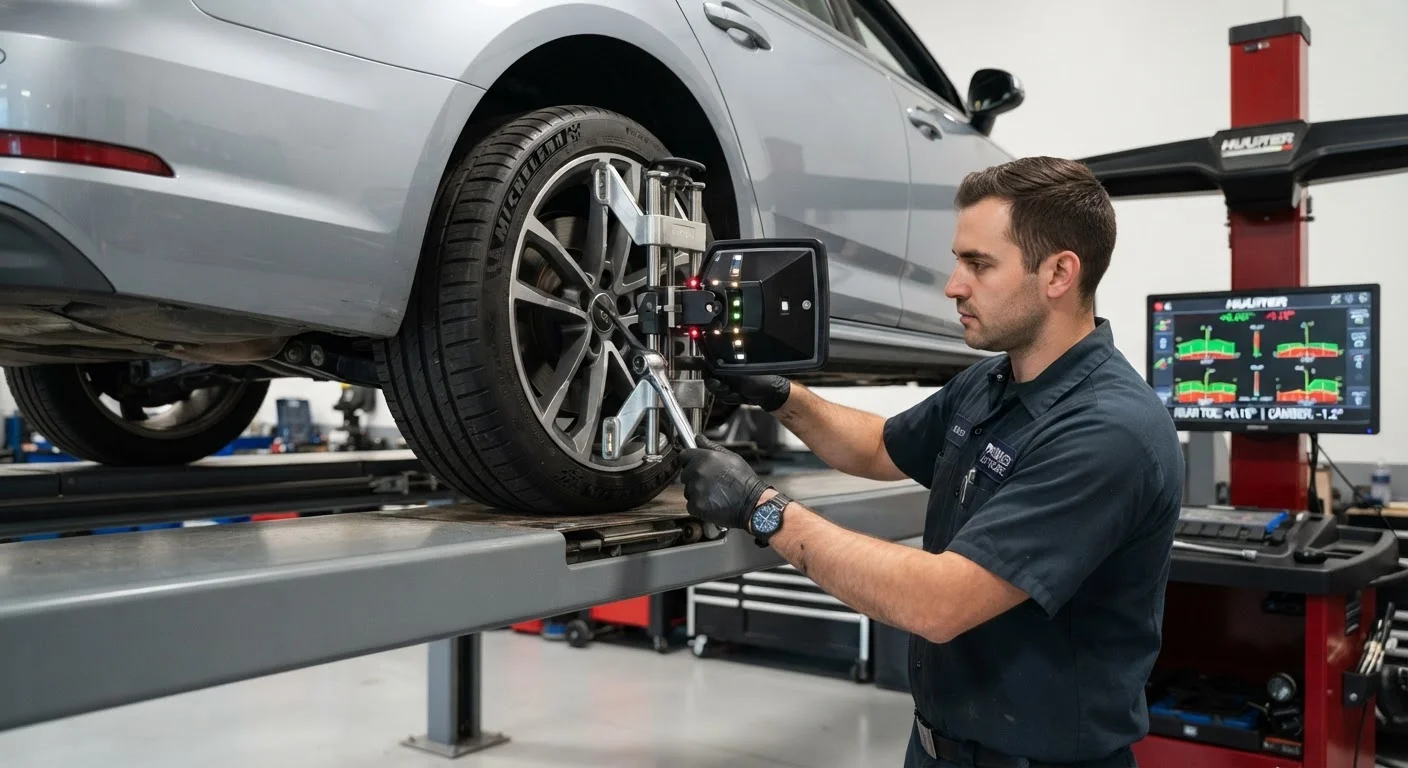
Photo credit: ProximityFinds.com | One-stop Reading Source
In this article
Alignment and balancing are often confused. Understand what each corrects, how they're measured, and the signs something is off.
Key Takeaways
- Wheel alignment controls the angle your tires sit at; wheel balance corrects uneven weight distribution.
- A car that pulls to one side usually points to an alignment issue, while vibration at highway speeds often signals a balance problem.
- Both problems can accelerate tire wear and reduce fuel efficiency if left uncorrected.
- Potholes, curb strikes, and normal road wear can knock either alignment or balance out of spec.
- A qualified mechanic can diagnose and correct both issues using specialized equipment.
Two Different Problems, Two Different Fixes
When your car doesn't feel right - pulling to one side, vibrating on the highway, wearing through tires faster than expected - the culprit is often either wheel alignment or wheel balance. These two terms get used interchangeably, but they describe completely different issues with different causes and different repairs.
Understanding the distinction helps you communicate clearly with a mechanic and make sense of what's actually being done to your car.
~$6B
Annual U.S. cost of tire-related vehicle damage
AAA estimates American drivers spend billions each year on vehicle repairs caused by poor road conditions, including alignment and suspension damage from potholes.
Up to 25%
Potential reduction in tire lifespan from misalignment
Industry sources indicate that even modest misalignment can significantly shorten tire life by causing uneven and accelerated tread wear.
What Wheel Alignment Actually Means
Alignment has nothing to do with the tires themselves - it's about the angles at which your wheels are positioned relative to the road and to each other. Mechanics measure three key angles:
- Toe - whether the fronts of your tires point slightly inward (toe-in) or outward (toe-out) when viewed from above. Think of it like your feet when you walk.
- Camber - the vertical tilt of the tire when viewed from the front. A tire leaning outward at the top has positive camber; inward is negative. Too much in either direction causes uneven wear.
- Caster - the angle of the steering axis when viewed from the side. Caster affects steering stability and straight-line tracking.
When these angles drift out of spec - which can happen gradually from normal driving or suddenly after a hard impact - the tires no longer roll in optimal alignment with each other. The result: the car pulls, the steering wheel sits crooked, and tires wear unevenly and prematurely.
Alignment is corrected by adjusting suspension components - not the tires - until all angles fall within the manufacturer's specifications. Your suspension system plays a direct role here, since worn shocks, struts, or control arms can make it impossible to hold a proper alignment.
Watch for the Drift Test
On a safe, straight, flat road with no traffic, briefly release the steering wheel and observe whether the car drifts in either direction. A well-aligned car should track straight with only minor variation. Consistent drifting to one side is a reliable sign that an alignment check is overdue.
What Wheel Balance Actually Means
A tire and wheel assembly isn't perfectly uniform in weight around its entire circumference - there are tiny variations in the rubber, the metal, and even the valve stem. When those variations are significant enough, the wheel spins unevenly, creating vibration that travels up through the car at speed.
Balancing is done on a specialized machine that spins each wheel assembly and detects where weight is unevenly distributed. Small metal weights are then clipped or adhered to the rim to compensate. The goal is a wheel that spins with no measurable wobble or vibration.
Balance can be thrown off by a missing weight (they do fall off), uneven tire wear, or changes in the tire itself over time. It's a routine part of any tire installation and should be rechecked periodically, especially if you start feeling that highway-speed shimmy.
When to Get Each Service - and What Happens If You Don't
Both services matter for tire longevity, fuel efficiency, and safe handling. Here's a practical way to think about when each is needed:
- Alignment check: After hitting a significant pothole or curb, after any suspension or steering repair, when installing new tires, or if you notice pulling, drifting, or uneven wear.
- Balancing: With every new tire installation, and anytime you feel vibration at highway speeds that wasn't there before.
Ignoring either problem doesn't just affect comfort - it shortens tire life, can reduce fuel economy as rolling resistance increases, and puts extra stress on steering and suspension components. A tire that's been allowed to wear unevenly from misalignment can't be corrected just by realigning; the damage to the tread is already done.
Both services are straightforward when caught early. They don't require major repairs - just time on the right equipment with a qualified technician.
Alignment Can't Be Eyeballed
Alignment angles are measured in fractions of a degree, which is far too small to detect by looking at the tires. Only a proper alignment rack with the right calibration equipment can give accurate readings and adjustments. If a shop claims to check alignment visually, seek a second opinion.
Frequently Asked Questions

Author
Automotive Editorial Team
Automotive Editorial Team is the collective byline for our editorial team and contributor network. Articles published under this byline or an editorial pen name are researched, written, and reviewed according to our editorial standards for clarity, consistency, and independence before publication.
View all articles →