
What Suspension Actually Does - and Why a Rough Ride Isn't Just Uncomfortable
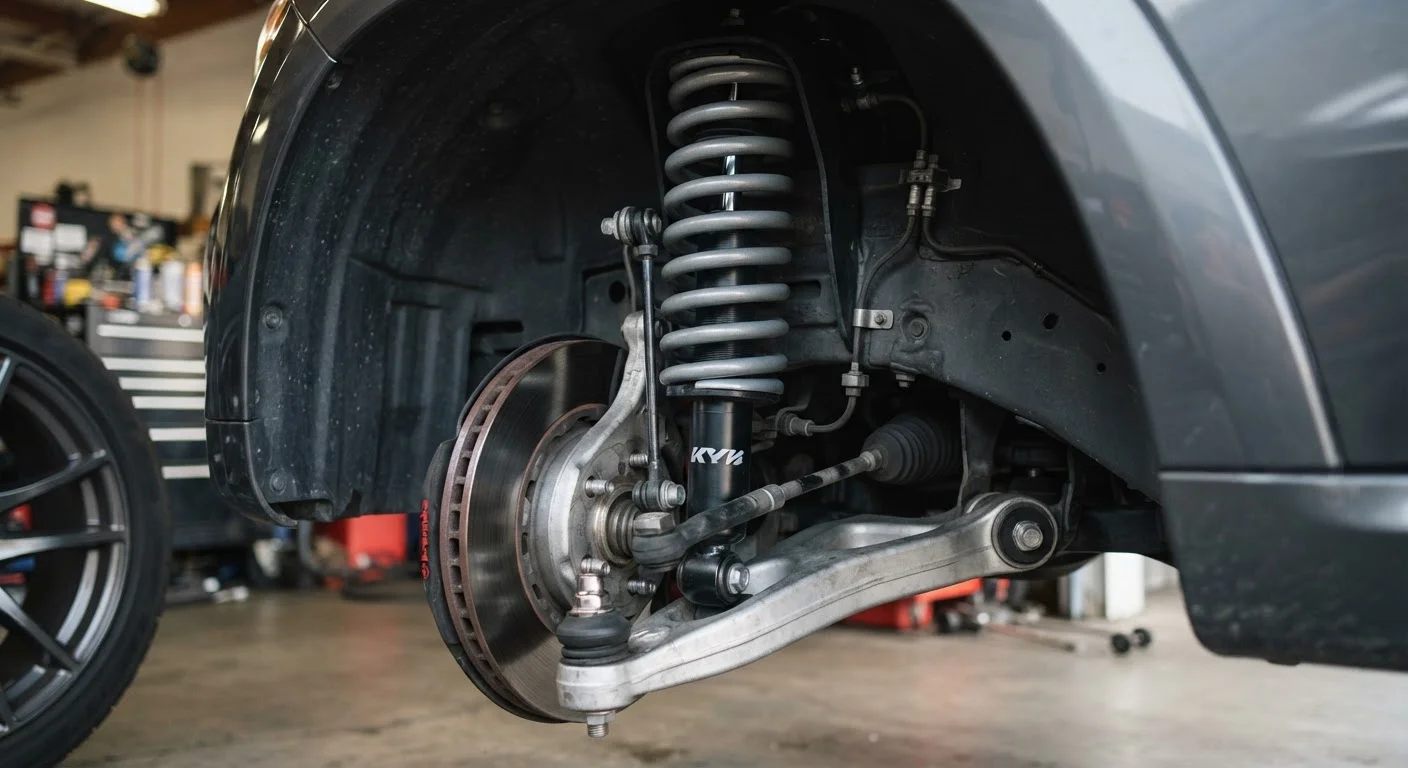
Photo credit: ProximityFinds.com | One-stop Reading Source
In this article
Shocks, struts, springs, and control arms all play a role in handling and safety. Learn what each component does and why it matters.
Key Takeaways
- Suspension keeps tires in contact with the road, which is critical for steering and braking.
- Shocks and struts dampen spring movement - they don't actually support the vehicle's weight.
- Worn suspension components can increase stopping distances and reduce handling control.
- A rough or bouncy ride is often the first sign that shock absorbers or struts are failing.
- Suspension wear happens gradually, making it easy to overlook until a safety issue develops.
The Real Job of Your Suspension
Most drivers think of suspension as a comfort feature - something that softens bumps so the ride feels smooth. That's part of it, but it's not the main job. The primary function of your suspension is to keep all four tires in firm, consistent contact with the road surface at all times.
Why does that matter? Because your tires can only steer, accelerate, and brake effectively when they're pressed against the pavement. The moment a tire loses contact - even briefly - you lose control. Suspension manages that constant tug-of-war between road forces and vehicle weight, so your tires stay planted whether you're navigating a pothole, taking a corner, or stopping quickly.
Think of it this way: without a functioning suspension, your car would be bouncing on its springs like a pogo stick, with tires intermittently leaving the ground. That's not a comfort problem - it's a control problem.
50%
Potential increase in stopping distance with worn shocks
Research cited by the Motorists Assurance Program suggests worn shock absorbers can significantly extend braking distances at highway speeds.
~50,000 mi
Typical shock absorber inspection interval
Many automotive service organizations recommend a suspension inspection at or around 50,000 miles, though driving conditions affect this considerably.
4 points
Contact patches keeping the car on the road
Each tire's contact patch - roughly the size of a hand - is the only thing connecting the vehicle to the road, making suspension function critical to control.
What Each Component Actually Does
Understanding suspension gets easier when you break it down component by component.
Springs
Springs - either coil springs or leaf springs depending on the vehicle - support the weight of the car and absorb the initial impact of road irregularities. When you hit a bump, the spring compresses to absorb the shock. But a spring alone would keep bouncing long after the bump is gone, which brings in the next part.
Shock Absorbers
Shock absorbers (often just called "shocks") control how quickly the spring compresses and rebounds. They convert the spring's kinetic energy into heat, which dissipates through hydraulic fluid. Shocks don't support the vehicle's weight - that's the spring's job. Their role is to dampen motion so the ride stabilizes quickly after a bump rather than continuing to oscillate.
Struts
A strut is essentially a shock absorber built into a structural housing that also serves as part of the suspension's pivot point. Because struts are load-bearing, replacing them is a more involved job than replacing standalone shocks. Most modern front-wheel-drive cars use a strut design at the front axle.
Control Arms
Control arms are hinged links that connect the wheel hub to the vehicle frame. They guide the up-and-down movement of the wheel while keeping it aligned with the vehicle. Worn control arm bushings - the rubber or polyurethane sleeves inside the joints - are a common cause of clunking sounds and steering imprecision.
Listen for Clues on Your Next Drive
A simple way to assess your suspension: find a nearly empty parking lot and drive over a speed bump at low speed. Your car should settle back to level within one or two bounces. Continued bobbing, a harsh thud, or a metallic knock are all worth mentioning to a mechanic at your next service visit.
Why a Rough Ride Is a Safety Signal
Suspension wear is gradual. Components don't usually fail overnight - they degrade slowly over tens of thousands of miles, and drivers often adapt to the changing feel without noticing. That gradual change is what makes worn suspension easy to miss until something goes wrong.
Here's what's actually happening when suspension components wear out:
- Longer stopping distances: Worn shocks allow the front end to pitch forward under braking, shifting weight unevenly and reducing tire grip.
- Reduced steering response: Play in worn control arm bushings and ball joints creates a vague, delayed steering feel.
- Tire cupping: When tires bounce rather than roll smoothly, they wear in an irregular scalloped pattern called cupping, which itself reduces traction.
- Body roll in corners: Without proper damping, the vehicle leans more aggressively in turns, pushing weight to the outside tires and reducing cornering stability.
If your car bounces noticeably after hitting a dip, pulls to one side, or makes clunking sounds over bumps, those are signs worth taking seriously. Suspension issues also interact with wheel alignment - if you've noticed your car drifting or the steering wheel sitting off-center, understanding alignment and balance can help clarify what's going on.
Suspension and Alignment Are Connected
Worn or damaged suspension components can throw off wheel alignment even after a fresh alignment service. If your alignment keeps going out of spec sooner than expected, have the suspension inspected before assuming the alignment itself is the problem. Fixing alignment on compromised suspension is a short-term fix at best.
When to Have Suspension Inspected
There's no single universal replacement interval for suspension components - wear depends on driving conditions, road quality, and vehicle load. Drivers who frequently navigate potholes, unpaved roads, or carry heavy loads will wear through shocks and struts faster than those on smooth highway commutes.
As a general guideline, having the suspension inspected around every 50,000 miles is reasonable, though many mechanics will check it opportunistically during tire rotations or brake jobs. Listen for new noises - clunking, knocking, or squeaking over bumps - and pay attention to changes in how the car handles rather than just how it feels.
Suspension repairs can range from straightforward bushing replacements to full strut assembly swaps. Some tasks, like replacing a stabilizer bar end link, are relatively simple. Others, like compressing and replacing coil springs on a strut assembly, involve working with components under significant stored energy and should be left to a qualified mechanic. When in doubt, have a professional assess it - the safety stakes are real.
Frequently Asked Questions

Author
Automotive Editorial Team
Automotive Editorial Team is the collective byline for our editorial team and contributor network. Articles published under this byline or an editorial pen name are researched, written, and reviewed according to our editorial standards for clarity, consistency, and independence before publication.
View all articles →