
Turbochargers and Superchargers: Forced Induction Without the Jargon
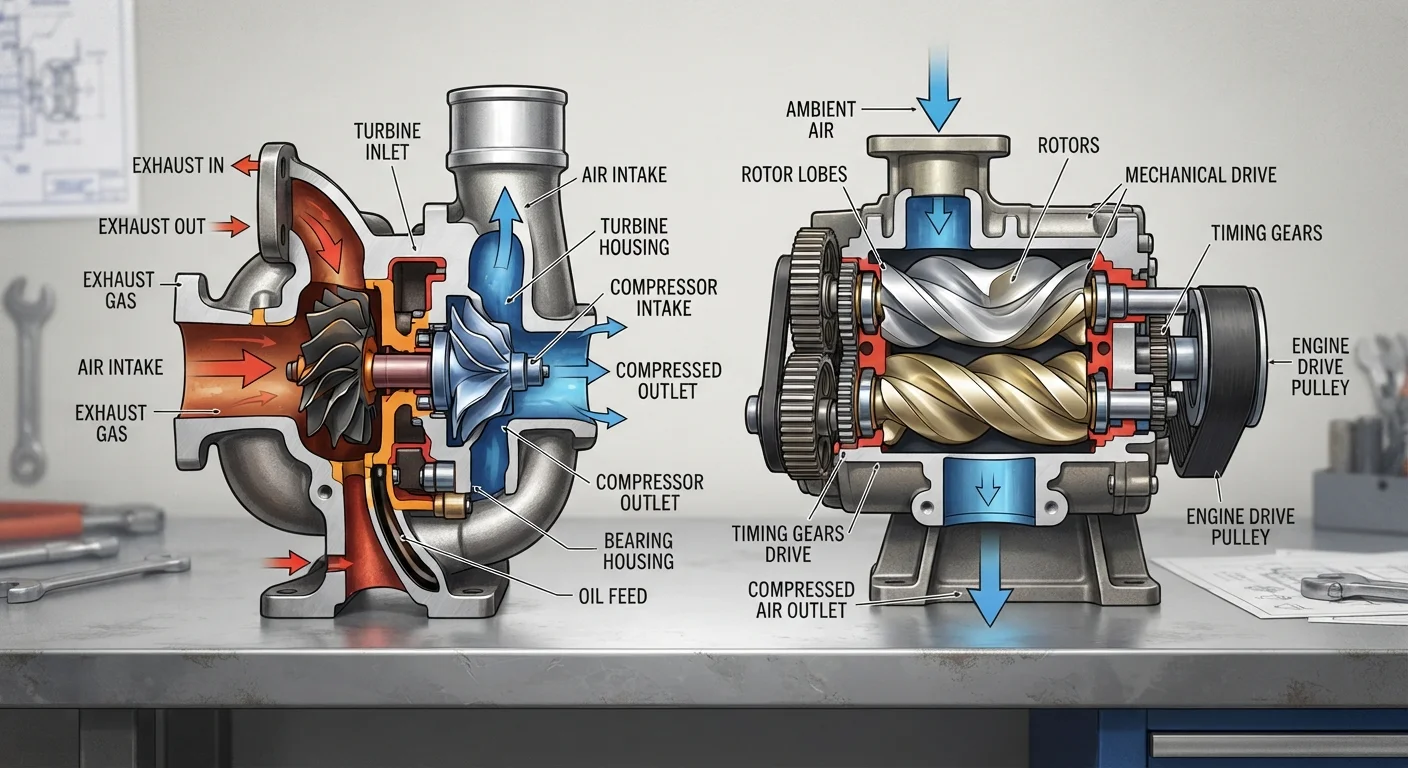
Photo credit: ProximityFinds.com | One-stop Reading Source
In this article
Both push more air into the engine, but they work very differently. Compare how each delivers power and the trade-offs involved.
Key Takeaways
- Turbochargers use exhaust gases to spin a turbine; superchargers draw power directly from the engine's crankshaft.
- Turbochargers are generally more fuel-efficient; superchargers deliver power more immediately.
- Turbo lag is a real trade-off with turbocharging, though modern designs have reduced it significantly.
- Both systems increase engine output without requiring a larger displacement engine.
- Maintenance costs and complexity differ between the two - worth knowing before choosing a vehicle.
What Forced Induction Actually Means
A standard naturally aspirated engine pulls air into the cylinders using only the downward stroke of the pistons - essentially atmospheric pressure does the work. Forced induction changes that equation by actively pushing a denser charge of air into the combustion chamber. More air means more oxygen, which means you can inject more fuel and produce a bigger combustion event - and more power - without enlarging the engine itself.
Both turbochargers and superchargers accomplish this goal, but they tap into completely different energy sources to do it. That single difference shapes almost everything about how each system feels to drive, how it affects fuel economy, and how it holds up over time. If you've ever wondered how a small four-cylinder can produce the output of a larger six, forced induction is usually the answer. Understanding how these systems work also pairs well with knowing how air and fuel mix in the first place - see our explainer on fuel injection vs. carburetors for that background.
How a Turbocharger Works
A turbocharger is driven by exhaust gases that would otherwise exit the tailpipe and go to waste. As those hot gases rush out of the engine, they spin a turbine wheel. That turbine is connected via a shared shaft to a compressor wheel on the intake side, which draws in fresh air, compresses it, and feeds it into the engine.
Because the energy source is otherwise wasted exhaust, turbos are inherently more fuel-efficient than superchargers. The trade-off is turbo lag - the brief delay between pressing the accelerator and feeling the power arrive. At low RPM, there isn't enough exhaust flow to spin the turbine quickly, so boost builds gradually. Engineers have addressed this with twin-scroll turbos, variable-geometry turbines, and smaller turbine housings, all of which reduce lag noticeably in modern vehicles.
Let Your Turbo Cool Down Before You Park
After spirited or extended driving, give your turbocharged engine a minute or two of light idling before shutting off. The turbo spins at enormous speeds and needs oil circulation to cool properly. Cutting power immediately traps heat and oil in the bearing housing, which accelerates wear over time. This simple habit can meaningfully extend turbo life.
Turbocharged engines also typically run an intercooler - a small heat exchanger that cools the compressed air before it enters the engine. Cooler air is denser, which adds efficiency and helps prevent engine knock.
How a Supercharger Works
A supercharger skips the exhaust entirely. It is belt-driven directly off the engine's crankshaft, meaning it spins whenever the engine spins. The result is near-instant boost - press the throttle and the power is there right away, with no waiting for exhaust pressure to build up.
The downside is that the engine has to power the supercharger itself. That parasitic draw reduces overall efficiency compared to a turbo. Supercharged vehicles generally use more fuel per mile under hard driving than a comparable turbocharged setup. However, for applications where throttle response and low-RPM torque are the priority - think towing, performance driving in tight spaces, or consistent city driving - the immediacy of a supercharger is genuinely useful.
| Turbocharger | Supercharger | |
|---|---|---|
| Energy Source | Exhaust gas (waste energy) | Engine crankshaft (belt-driven) |
| Throttle Response | Slight lag at low RPM | Immediate, linear response |
| Fuel Efficiency | Better - uses waste energy | Lower - parasitic engine draw |
| Heat Management | High heat; intercooler often required | Less extreme heat demands |
| Maintenance Focus | Oil quality critical; cool-down after hard use | Belt and internal oil/rotor inspection |
| Common Application | Mainstream cars, trucks, diesels | Performance variants, specialty engines |
Maintenance and Longevity Considerations
Both systems add mechanical complexity, but they fail in different ways. Turbochargers run at extremely high temperatures - turbine speeds can exceed 100,000 RPM - and rely heavily on clean, adequate engine oil for cooling and lubrication. Neglecting oil changes on a turbocharged vehicle is one of the most common causes of premature turbo failure. Letting the engine idle for 30-60 seconds before shutting off after hard driving allows oil to keep circulating and cool the turbo down.
Superchargers are mechanically simpler in some respects - they don't face the same heat extremes - but the drive belt and internal rotors require periodic inspection. Some supercharger designs use their own internal oil supply, which also needs maintenance. Both systems generally outlast the rest of the powertrain when properly cared for, but repair costs if something does go wrong tend to be higher than standard engine components.
Don't Skip Oil Changes on a Turbo Engine
Turbocharged engines are significantly more sensitive to oil quality and change intervals than naturally aspirated engines. Degraded oil loses its ability to lubricate and cool the turbo's high-speed bearings, leading to costly failure. Follow your manufacturer's recommended oil type and change interval - and consider erring on the shorter side if you drive hard or in extreme temperatures.
Which One Shows Up in Real Vehicles
Turbochargers dominate the modern mainstream market. Nearly every automaker offering small displacement four-cylinder engines - used for fuel economy ratings - relies on a turbo to keep power levels acceptable. Many diesel trucks and performance cars also use turbos, and twin-turbo setups are common in higher-output six- and eight-cylinder engines.
Superchargers appear more selectively. They're frequently found on performance-focused variants of existing models, where linear power delivery and high-RPM performance take priority over efficiency. Some manufacturers combine both: a supercharger handles low-RPM response while a turbocharger takes over at higher engine speeds, effectively eliminating lag while maintaining top-end power. These twin-charged systems are more complex and less common, but they illustrate just how much engineering goes into managing the simple act of getting air into an engine.
Whatever system is under the hood of your vehicle, knowing how it works helps you maintain it smarter and recognize early warning signs - which is ultimately more useful than any specification sheet.

Author
Automotive Editorial Team
Automotive Editorial Team is the collective byline for our editorial team and contributor network. Articles published under this byline or an editorial pen name are researched, written, and reviewed according to our editorial standards for clarity, consistency, and independence before publication.
View all articles →