
The Three-Second Rule and Other Spacing Habits That Keep You Out of Collisions
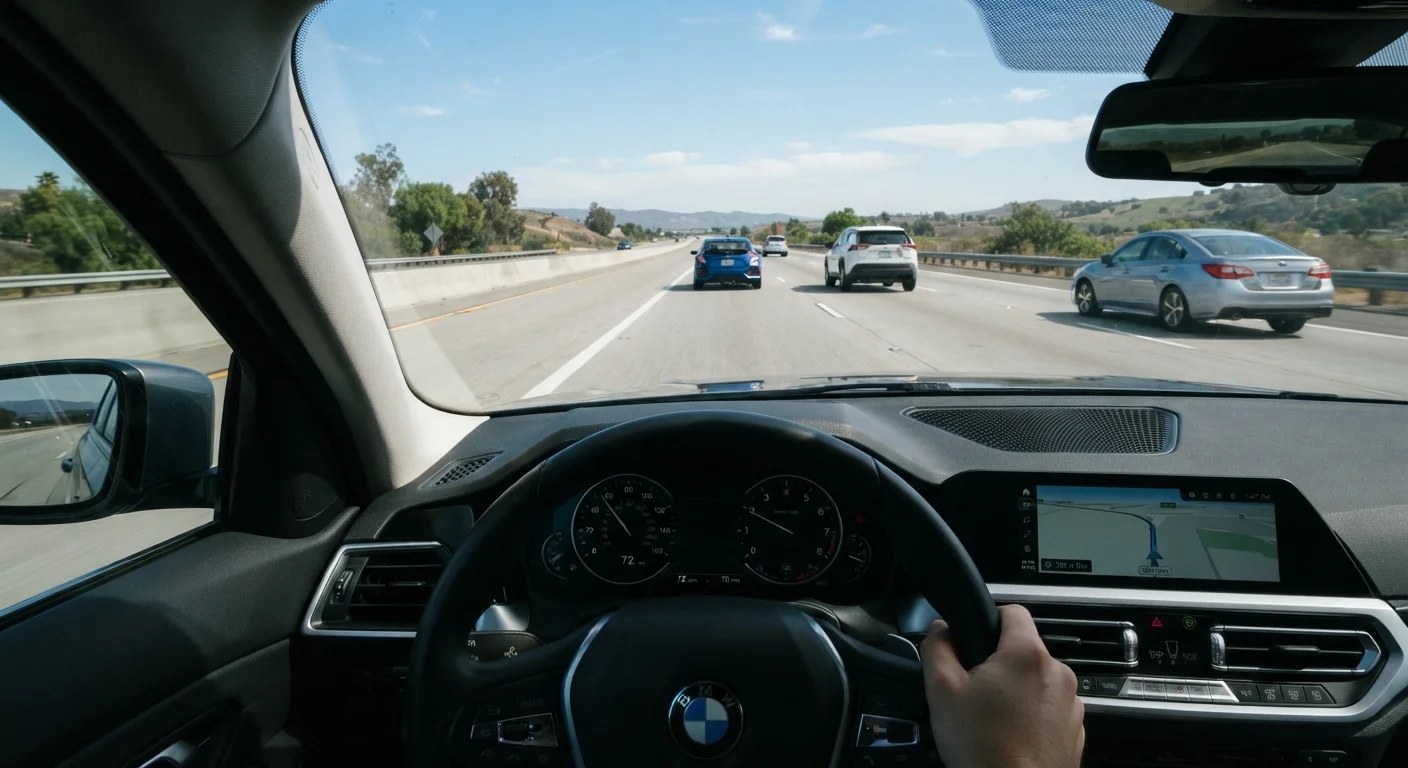
Photo credit: ProximityFinds.com | One-stop Reading Source
In this article
Safe following distance isn't just a suggestion—it's a buffer that determines whether a sudden stop ends safely or badly. Learn how to apply it consistently.
Key Takeaways
- The three-second rule gives most drivers enough reaction and braking time under normal conditions.
- Bad weather, heavy loads, and high speeds all require you to extend your following distance beyond three seconds.
- Tailgating dramatically reduces your stopping buffer and is a leading cause of rear-end collisions.
- Spacing habits apply in all directions - not just behind the car in front of you.
- Consistent spacing requires active, ongoing adjustment rather than a one-time check.
What the Three-Second Rule Actually Means
The three-second rule is straightforward: when the vehicle ahead of you passes a fixed point - a sign, a bridge, a crack in the road - you should count at least three seconds before your own vehicle reaches that same spot. If you arrive before you finish counting, you're too close.
The logic behind it is rooted in how stopping actually works. When something unexpected happens ahead of you, your brain needs time to register the hazard, send a signal to your foot, and have your foot physically press the brake - all before braking itself begins. That cognitive and physical delay is called reaction time, and for most drivers under normal alertness, it runs roughly 1.5 seconds. Add the time it takes your car to actually stop after brakes engage, and three seconds becomes the practical minimum buffer at typical city and suburban speeds.
For more on how stopping distances break down - and why even small reductions in following space carry outsized risk - see our guide on tailgating and stopping distances.
“The danger of following too closely is that it removes the one thing you can never get back in an emergency: time. Space and time are the same thing when you're driving.”
— A highway safety researcher, Contributor to driver behavior studies in road safety literature
When Three Seconds Isn't Enough
Three seconds works as a baseline in good conditions: dry pavement, normal visibility, standard passenger vehicles traveling at moderate speeds. Change any of those variables, and you need more room.
~40%
Of all crashes that are rear-end collisions
According to the National Highway Traffic Safety Administration, rear-end crashes account for roughly 40% of all reported collisions in the U.S. annually.
300 ft
Minimum gap at 65 mph using the 3-second rule
At 65 miles per hour, three seconds of following distance translates to approximately 285-300 feet - nearly the length of a football field.
- Rain and wet roads: Wet pavement can more than double stopping distance compared to dry conditions. A common guideline is to double your following gap - six seconds or more - when it's raining.
- Snow and ice: On icy surfaces, stopping distances can increase dramatically. Some driver training programs recommend up to ten times the dry-road gap in severe winter conditions.
- Towing or hauling: A vehicle pulling a trailer or carrying a heavy load takes significantly longer to stop. Increase your following distance accordingly, and remember that trailers don't have their own brakes in many configurations.
- High speeds: At highway speeds, three seconds still applies, but the physical distance it represents grows considerably. At 65 mph, three seconds equals nearly 300 feet of road.
- Night driving or reduced visibility: If you can't see a hazard until you're close to it, extra space is the only buffer you have.
Adjusting your gap to match conditions is part of what safe driving habits that compound over a lifetime look like in practice.
Spacing Habits Beyond the Car Directly Ahead
Most drivers think about following distance only in relation to the vehicle directly in front of them. But safe spacing is three-dimensional - it involves the vehicles beside you, behind you, and well ahead in your travel path.
Keep a lateral buffer when driving alongside other vehicles on multi-lane roads.
A driver in an adjacent lane who drifts, swerves, or makes a sudden lane change has almost no margin for error if you're running door-to-door with them. Staggering your position so you're not directly beside another vehicle gives both of you more room to react.
Be aware of what's happening two or three vehicles ahead, not just directly in front of you.
Brake lights from the car immediately ahead give you less warning than catching the ripple of brake lights two cars up. Seeing the problem earlier means you have more time - and less need to brake hard.
Check your mirrors regularly to understand the gap behind you.
If someone is following you too closely, knowing that changes how you handle your own braking. Abrupt stops become more dangerous when you're being tailgated from behind - giving yourself more space ahead allows you to brake gradually if needed.
Recalibrate your gap after being cut off rather than immediately closing it back up.
When another driver cuts into your following space, the instinct is to move closer to the vehicle that just merged in front of you. Resist that. The gap was there for a reason, and it still is - it now applies to the new vehicle in front of you.
Making It a Consistent Habit
Knowing the rule and applying it are two different things. Most drivers who tailgate aren't doing it intentionally - they fall into a compressed following distance gradually, often without noticing. Traffic, impatience, and the unconscious tendency to match the behavior of surrounding vehicles all push gaps smaller over time.
Following distance is also addressed under traffic law in every U.S. state, though how it's defined varies. Most statutes require a "reasonable and prudent" distance that accounts for speed and road conditions - which gives you some flexibility but also puts the judgment call on you. For a broader look at how spacing laws fit into the rules drivers most often misread, check out traffic laws drivers routinely misunderstand.
Use the Count, Not a Distance Estimate
Judging distance by eye is unreliable - gaps look different depending on vehicle size, speed, and road conditions. The time-based count is more consistent because it automatically adjusts: at higher speeds, three seconds represents a greater physical distance. Stick with the count rather than trying to estimate car lengths.

Author
Automotive Editorial Team
Automotive Editorial Team is the collective byline for our editorial team and contributor network. Articles published under this byline or an editorial pen name are researched, written, and reviewed according to our editorial standards for clarity, consistency, and independence before publication.
View all articles →