
U.S. Passport vs. Passport Card: Which One Do You Actually Need?
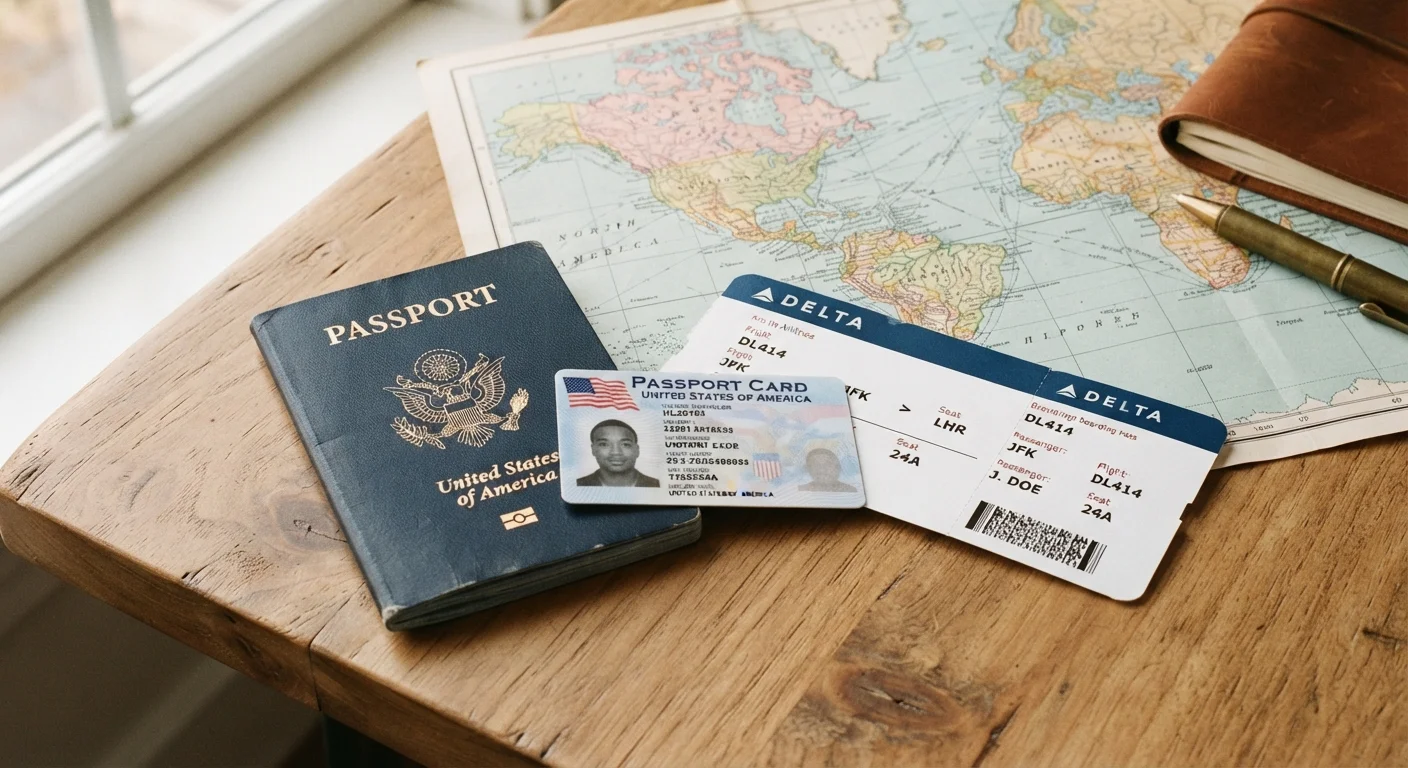
Photo credit: ProximityFinds.com | One-stop Reading Source
In this article
A passport book and a passport card aren't interchangeable. Learn exactly where each is accepted and which makes sense for your travel plans.
Key Takeaways
- The passport book is accepted for all international travel, including international flights.
- The passport card is only valid for land and sea border crossings to Canada, Mexico, Bermuda, and the Caribbean.
- The passport card costs significantly less than the passport book and fits in a wallet.
- Many travelers benefit from holding both documents - one for daily border runs, one for air travel.
- Always verify entry requirements with official government sources before any international trip.
What Each Document Actually Is
Both the U.S. Passport Book and the U.S. Passport Card are issued by the U.S. Department of State, and both confirm your American citizenship and identity. The resemblance ends there.
The passport book is the traditional, credit-card-sized booklet - typically 28 or 52 pages - that most Americans picture when they think of a passport. It carries a machine-readable zone, an embedded chip with biometric data, and visa pages for foreign stamps. It is accepted for all international travel: air, land, and sea, to any country in the world.
The passport card is a wallet-sized, rigid card introduced in 2008. It also contains a radio-frequency identification (RFID) chip, but it is only valid for entering the United States from Canada, Mexico, Bermuda, and the Caribbean - and only by land or sea. It cannot be used to board any international flight, period.
For a broader look at entry documents, visa categories, and how destination rules can change, see our practical reference on passports, visas, and entry requirements.
| Criterion | Passport Book | Passport Card |
|---|---|---|
| International air travel | ✓ Accepted worldwide | ✗ Not accepted |
| Land border crossings (Canada & Mexico) | ✓ Accepted | ✓ Accepted |
| Sea travel (Caribbean & Bermuda) | ✓ Accepted | ✓ Accepted |
| Physical size | Booklet (passport-sized) | Wallet card |
| Validity period (adults) | 10 years | 10 years |
| Cost (first-time adult) | Higher fee | Lower fee |
| Contains visa pages | ✓ Yes | ✗ No |
| RFID chip | ✓ Yes (biometric) | ✓ Yes (land border lanes) |
Cost, Processing, and Validity
One of the clearest practical differences is cost. For first-time adult applicants, the passport book carries a higher application fee than the passport card - a meaningful gap if you're budget-conscious. Applicants who want both documents at the same time pay a reduced combined fee compared to applying separately later. Check the U.S. Department of State website for current fee schedules, as these are updated periodically.
Both documents are valid for 10 years for adults (18 and older) and 5 years for minors under 18. Processing times - whether standard or expedited - are the same for both, so there's no speed advantage to choosing one over the other.
10 years
Validity for adult holders of either document
Both the passport book and passport card share the same 10-year validity period for applicants aged 18 and older, per the U.S. Department of State.
2008
Year the passport card was introduced
The U.S. Passport Card was created to meet Western Hemisphere Travel Initiative requirements for land and sea border crossings between neighboring countries.
~150M+
Valid U.S. passports in circulation
The U.S. Department of State has reported that passport holdings have grown steadily, reflecting increased American interest in international travel.
One practical note: the passport card's RFID chip is designed to speed up border processing lanes at land ports of entry, which is a genuine convenience for frequent border crossers. However, that same chip means the card should be stored in an RFID-blocking sleeve when not in use to reduce the (admittedly low) risk of unauthorized scanning.
Making the Right Call for Your Travel Life
For most Americans, the decision is straightforward: if you ever plan to board an international flight, you need the passport book. No airline or foreign country accepts the passport card as a travel document for air entry.
Where the card earns its keep is for people who live near the U.S.-Canada or U.S.-Mexico border and cross regularly by car or ferry. Flashing a wallet card at the border is faster and less worrisome than producing a booklet you'd rather keep safe at home.
A common and sensible strategy is to hold both. Use the card for routine land crossings - it's cheap to replace if lost - and reserve the book for international flights. This also means your book stays in better condition over time, with fewer opportunities to be lost, damaged, or stolen during everyday commutes.
Dual Citizenship and Name Changes
If you hold dual citizenship, check whether your destination country requires you to enter on a specific passport - some nations expect their citizens to use that country's passport regardless of other documents held. Similarly, if your legal name has changed since your passport was issued, update your document before travel to avoid mismatches with airline tickets. The U.S. Department of State outlines the name-change amendment process on its official website.
Whatever you decide, one rule applies universally: verify the specific entry requirements for your destination with official sources - the U.S. Department of State and the destination country's embassy - well before your travel date. Requirements can change, and no travel document eliminates the need for due diligence.

Author
Travel Editorial Team
Travel Editorial Team is the collective byline for our editorial team and contributor network. Articles published under this byline or an editorial pen name are researched, written, and reviewed according to our editorial standards for clarity, consistency, and independence before publication.
View all articles →