
How to Read a Travel Advisory - and What Each Level Actually Means
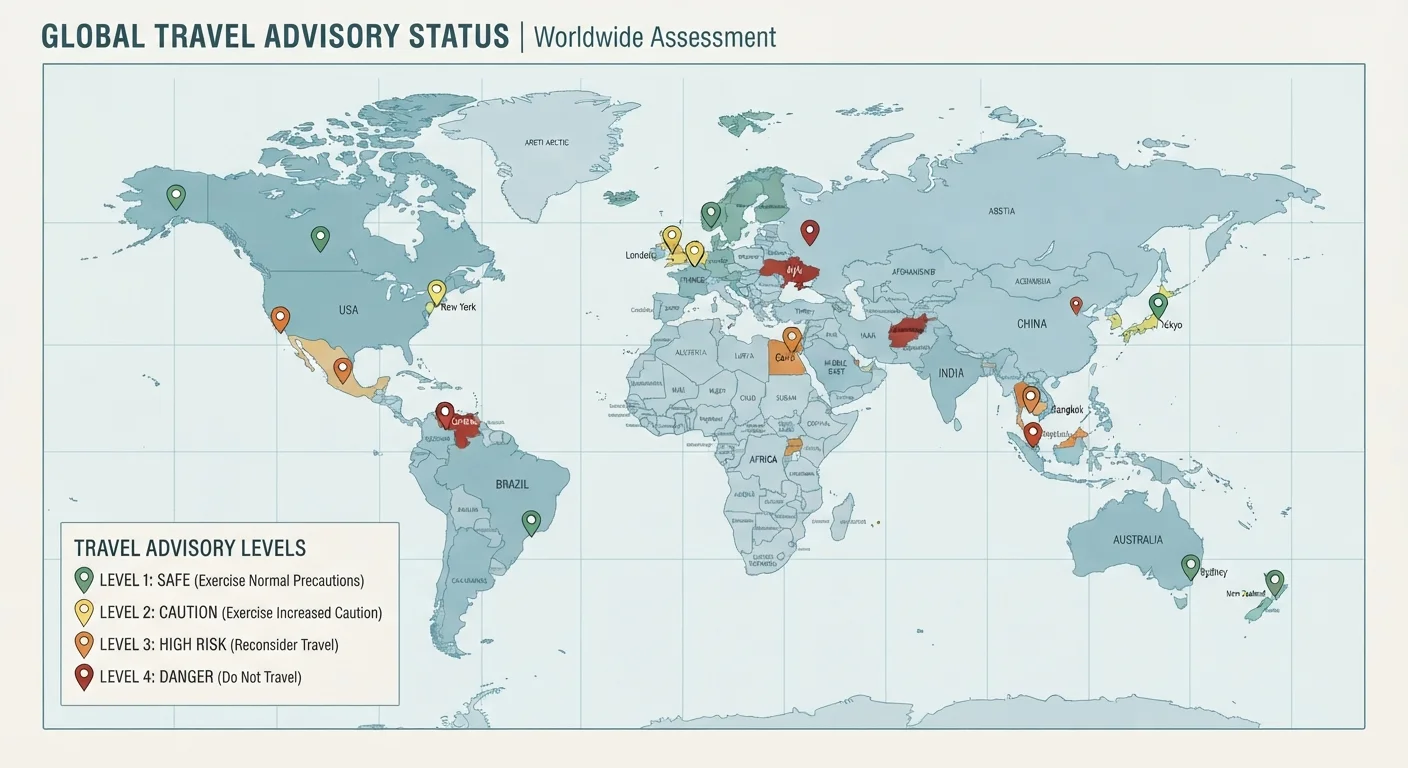
Photo credit: ProximityFinds.com | One-stop Reading Source
In this article
The State Department's four-level advisory system can be confusing. Here's what each designation means and how to use them when planning international travel.
Why Travel Advisories Exist - and Who Issues Them
Before you book that international flight, there's one free resource worth checking that many travelers skip entirely: the U.S. State Department's travel advisory page. The State Department monitors security conditions, disease outbreaks, natural disaster risks, civil unrest, and entry restrictions in every country around the world and publishes those assessments in plain, publicly accessible language.
Advisories are not travel bans. They're risk assessments - calibrated, regularly updated summaries designed to help Americans make informed decisions. Think of them the way you'd approach a weather forecast: useful context, not a final verdict on whether you should go. Understanding what each level means is the first step to using them well.
Before departure, pair advisory research with our pre-departure checklist for Americans going abroad to make sure nothing critical slips through the cracks.
| Issuing Authority | U.S. Department of State (travel.state.gov) |
| Number of Advisory Levels | 4 (Level 1 through Level 4) (U.S. State Department advisory system) |
| Countries Covered | Every country in the world (travel.state.gov) |
| Where to Find Advisories | travel.state.gov |
| Cost to Access | Free - no account required |
| How Often Updated | As conditions change; each advisory shows a review date (U.S. State Department) |
The Four Advisory Levels - Decoded
The State Department uses a numbered, four-level system. Each level comes with a standardized action phrase so you know immediately what's being recommended.
Travel Advisory
An official government assessment of the safety conditions in a foreign country, published to help citizens make informed travel decisions. The U.S. State Department issues advisories for every country in the world.
Level 1 - Exercise Normal Precautions
The lowest State Department advisory level, indicating no elevated risks beyond those present in any international destination. Standard situational awareness applies.
Level 3 - Reconsider Travel
A State Department designation urging Americans to think carefully before visiting. It indicates serious and credible risks such as crime, civil unrest, or terrorism that materially elevate danger.
Consular Assistance
Help provided by a U.S. embassy or consulate to American citizens abroad, including emergency passport services, welfare checks, and coordination during crises. This assistance may be limited in Level 4 countries.
STEP (Smart Traveler Enrollment Program)
A free State Department program that allows Americans traveling or living abroad to register their trip with the nearest U.S. embassy, enabling emergency notifications and assistance.
Level 1: Exercise Normal Precautions
This is the lowest designation. It means the destination is considered broadly safe for travel, with no significant, elevated threats specific to Americans. Standard situational awareness - the kind you'd exercise anywhere - is all that's advised. Many popular destinations in Western Europe, Japan, and the South Pacific carry Level 1 status.
Level 2: Exercise Increased Caution
A Level 2 advisory signals that there are heightened risks in a country, even if the popular tourist areas seem calm. This might reflect ongoing crime in certain zones, localized civil tension, or a credible but diffuse threat. The advisory typically specifies what the concern is and where it is elevated - read the detail, not just the headline number. Many travelers visit Level 2 countries without incident, but awareness and pre-trip research matter more here.
Level 3: Reconsider Travel
Level 3 is a meaningful escalation. The State Department is actively recommending that Americans think carefully before going. Common triggers include serious crime, widespread civil unrest, armed conflict in parts of the country, or significant terrorism risk. Travel insurance, emergency planning, and enrollment in the STEP program become especially important at this level.
Level 4: Do Not Travel
Level 4 is the most severe designation. The State Department is explicitly advising Americans not to travel to that country. Reasons typically include active armed conflict, kidnapping risk, or conditions where the U.S. embassy's ability to provide consular assistance is severely limited. U.S. embassies may be closed or operating under emergency staffing in Level 4 countries. This level is applied selectively and seriously.
How to Actually Use an Advisory When Planning a Trip
The advisory level is a starting point, not the whole picture. Here's how to go deeper:
- Read the full advisory text. The risk level is a headline; the body explains what type of risk exists and where. A country can carry a Level 2 advisory because of one volatile border region while its major cities remain stable and widely visited.
- Check for regional breakdowns. Many advisories include state- or province-level information. A single country advisory may note that specific areas warrant greater caution while others are considered lower risk.
- Look at the date. Advisories are updated as conditions change. Always check when the advisory was last reviewed, especially for destinations experiencing fast-moving political situations.
- Cross-reference other sources. The Centers for Disease Control and Prevention (CDC) publishes separate health notices for travelers. Your destination country's government may issue its own guidance for visitors, too.
- Understand how it affects your travel insurance. Traveling to a country under a Level 3 or Level 4 advisory may affect your travel insurance coverage, including evacuation and trip-cancellation benefits. Review your policy carefully and verify directly with your insurer before booking.
Also understand that advisories don't cover entry requirements - those are a separate system entirely. Our guide on how entry requirements work explains visas, eTAs, and visa-on-arrival policies in plain language.
Advisories vs. Entry Requirements Are Different Things
A travel advisory tells you about safety and security conditions - it is not the same as an entry requirement or visa rule. A country can have a Level 1 advisory and still require Americans to obtain a visa or eTA before arrival. Always check both independently through official sources before you travel.
Travel advisory information can change rapidly. Always verify current advisory levels and any entry or safety requirements directly through official U.S. government sources - including travel.state.gov - before making travel decisions.

Author
Travel Editorial Team
Travel Editorial Team is the collective byline for our editorial team and contributor network. Articles published under this byline or an editorial pen name are researched, written, and reviewed according to our editorial standards for clarity, consistency, and independence before publication.
View all articles →