
Gym Workouts vs. Home Workouts: Matching Your Environment to Your Goals
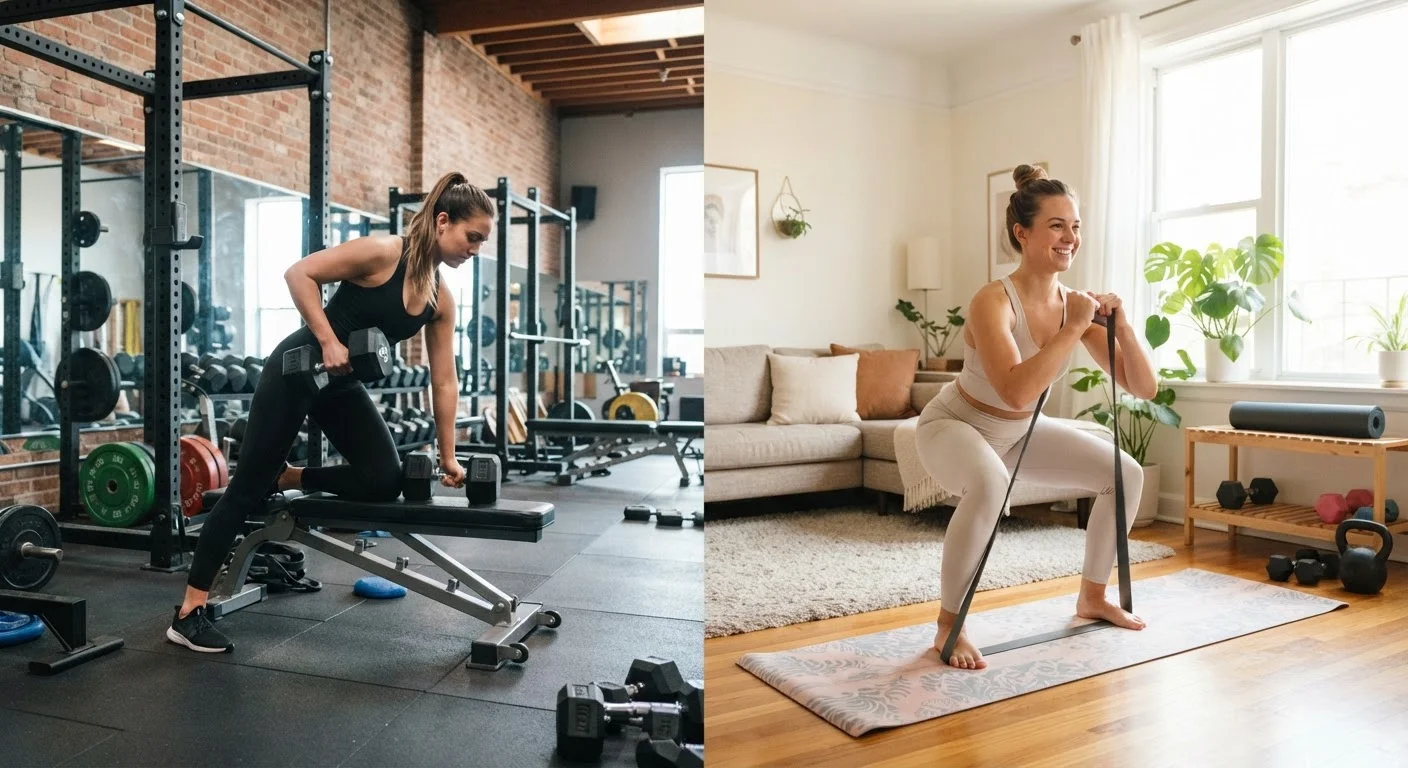
Photo credit: ProximityFinds.com | One-stop Reading Source
In this article
Neither gym nor home training is universally better. This comparison covers consistency, cost, variety, and what actually matters for your specific situation.
Key Takeaways
- Neither gym nor home training is inherently superior - consistency is the deciding factor.
- Gym memberships offer equipment variety and social accountability; home setups offer convenience and lower long-term cost.
- Your schedule, personality, budget, and specific goals should drive the choice, not general trends.
- Many people benefit from a hybrid approach rather than committing exclusively to one environment.
- The best workout environment is the one you will reliably return to.
Why the Gym vs. Home Debate Misses the Real Question
The fitness industry tends to frame gym versus home training as a binary rivalry, but the evidence points to a simpler truth: the best workout environment is the one that keeps you showing up. Consistency, not intensity, is the primary driver of long-term physical progress.
That said, environment does matter - just differently for different people. Someone who dreads commuting to a gym will repeatedly skip sessions, while someone who finds their living room too distracting will struggle to focus at home. Understanding which barriers and motivators apply to you is more useful than any general ranking of the two options.
This article maps both environments against criteria that actually affect results: cost, variety, accountability, convenience, and suitability for specific goals. If you are starting from scratch with fitness, these factors deserve particular attention before you invest time or money.
How Gym and Home Workouts Compare Across Key Criteria
The table below reflects general patterns across the two environments. Individual outcomes will vary depending on your local gym options, available home space, and budget.
| Gym Workouts | Home Workouts | |
|---|---|---|
| Upfront cost | Low (membership fee) | Moderate (equipment purchase) |
| Ongoing monthly cost | $30-$80/month typical | Minimal after setup |
| Equipment variety | High - machines, free weights, cardio | Limited by space and budget |
| Convenience | Requires travel and scheduling | Available anytime, no commute |
| Social accountability | Strong - peers, classes, staff | Self-directed; low social support |
| Privacy | Low - shared public space | High - fully private |
| Suitability for beginners | Good if coaching is accessible | Good with online guidance |
| Flexibility of schedule | Limited by operating hours | 24/7 availability |
Cost deserves special attention. A gym membership typically runs $30-$80 per month in the US, adding up to $360-$960 annually. Home equipment has higher upfront costs but lower ongoing expense - a set of adjustable dumbbells and a resistance band kit can serve most general fitness goals for years. However, specialized equipment for powerlifting, rowing, or certain machine-based rehab work remains cost-prohibitive for most home setups.
Test Before You Commit
Most gyms offer trial periods or day passes that let you evaluate the environment before signing a contract. Similarly, try a week of home-only training before investing significantly in equipment. Observing your own motivation and consistency during a short trial is more predictive of long-term success than any general recommendation.
Where the Gym Has a Genuine Advantage
Gyms provide access to barbells, cable machines, cardio equipment, and - at many facilities - qualified staff. This matters most for two groups: people working toward strength-specific goals that require progressive overloading with heavy free weights, and beginners who benefit from guided instruction to develop safe movement patterns.
Social environment is another real variable. Research consistently shows that exercising with or near others can increase effort and duration for many individuals. Group fitness classes offer structured social accountability that is genuinely difficult to replicate alone at home.
Gyms also create a dedicated mental context for exercise. Arriving at a space associated specifically with physical activity can help some people separate training time from the competing demands of home life.
Where Home Training Holds Its Own
Eliminating travel time removes one of the most common barriers to exercise. A 20-minute round-trip commute compounded over five sessions per week equals nearly two hours reclaimed - time that, for many people, determines whether they train at all.
Home workouts also offer privacy that can be meaningful for people who feel self-conscious in public settings, those managing chronic conditions, or individuals in older age groups re-entering physical activity. Bodyweight training, resistance bands, and moderate-weight dumbbells cover a surprisingly broad range of goals, from general conditioning to meaningful muscular development.
It is worth dispelling a persistent fitness myth: that home training cannot build real strength or fitness. For most general health goals - cardiovascular fitness, functional strength, mobility, and weight management - home-based movement is fully adequate when programmed progressively.
~30%
Adults meeting aerobic activity guidelines
According to CDC data, roughly 3 in 10 US adults meet recommended aerobic physical activity guidelines, suggesting that environment matters less than simply starting.
24%
Gym members who rarely attend
Research on gym membership patterns consistently finds that a substantial minority of members attend infrequently, highlighting that membership alone does not ensure consistency.
Matching Environment to Your Actual Goals
Goal clarity makes this decision more straightforward. Consider the following patterns:
- General health and longevity: Both environments work equally well. Choose based on consistency factors alone.
- Competitive strength sports or bodybuilding: Gym access to barbells, power racks, and heavy plates is practically necessary at intermediate and advanced levels.
- Cardiovascular health: Walkable neighborhoods, cycling, and home cardio equipment can replicate or replace gym cardio machines effectively. See also: how cardio and strength training affect your body differently.
- Recovery and low-impact movement: Home environments often suit mobility work, stretching, and active recovery sessions better than busy gym floors.
A hybrid approach - using a gym for heavy compound lifts while handling cardio and accessory work at home - is a practical middle path that many people find sustainable.
This article is for general informational purposes only and does not constitute medical or personal fitness advice. Consult a qualified healthcare provider or certified fitness professional before beginning or significantly changing any exercise program, especially if you have an existing health condition.

Author
Health Editorial Team
Health Editorial Team is the collective byline for our editorial team and contributor network. Articles published under this byline or an editorial pen name are researched, written, and reviewed according to our editorial standards for clarity, consistency, and independence before publication.
View all articles →