
Fixed vs. Variable Expenses: What the Difference Means for Your Budget
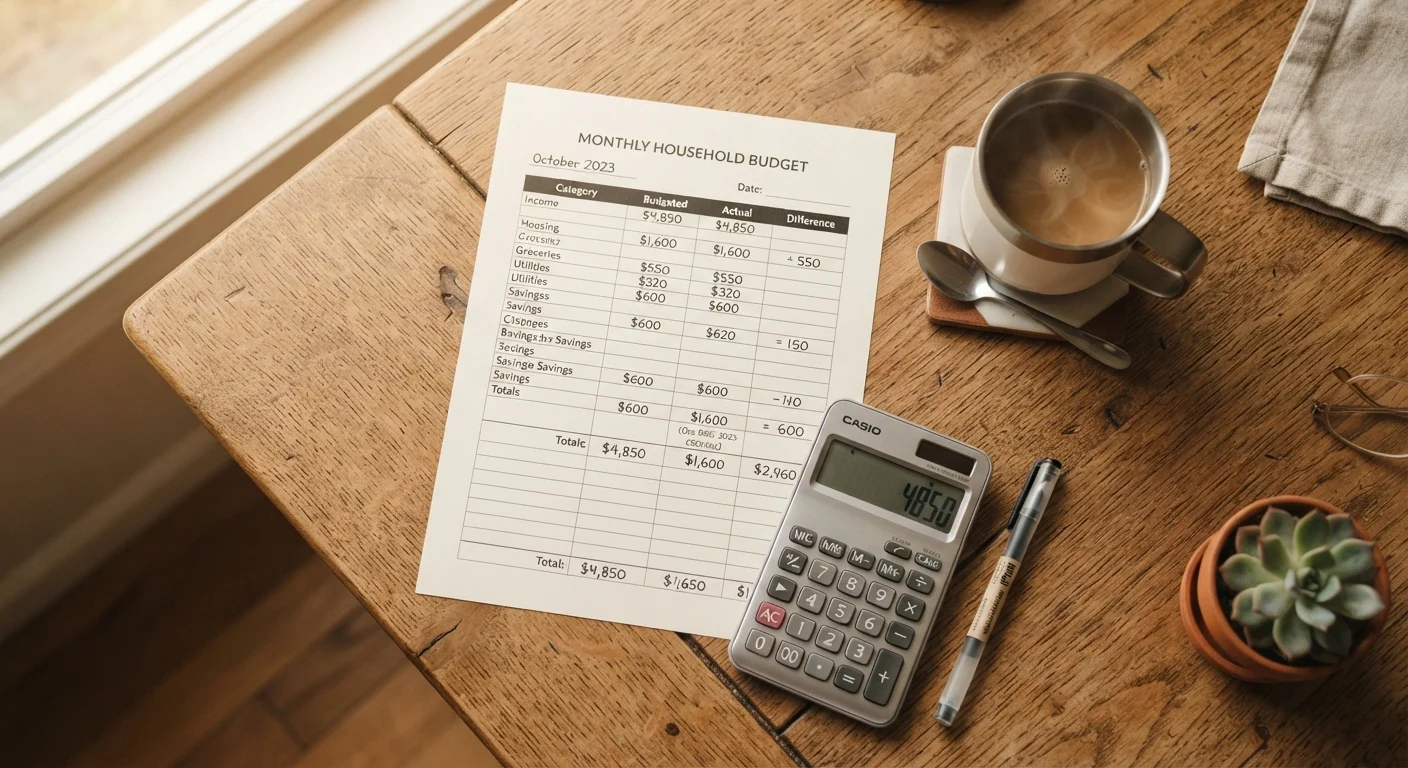
Photo credit: ProximityFinds.com | One-stop Reading Source
In this article
Fixed costs stay the same every month; variable ones shift. Learn why that distinction matters when you're planning where your money goes.
Key Takeaways
- Fixed expenses stay constant each billing cycle and are easy to plan around in a budget.
- Variable expenses fluctuate and represent your primary opportunity to reduce spending.
- Knowing which costs are fixed versus variable helps you respond to income changes more effectively.
- Some expenses have both fixed and variable components, requiring closer tracking.
- A clear expense map lets you set realistic savings targets without guesswork.
The Core Distinction Explained
Every dollar that leaves your household falls into one of two fundamental categories. Fixed expenses are predictable - the amount due is the same every billing cycle regardless of what you do. Variable expenses shift based on your behavior, consumption, or external factors.
This isn't just an accounting technicality. When you sit down to build a budget, fixed expenses form the non-negotiable floor of your monthly obligations. Variable expenses represent the territory where deliberate choices - ordering in versus cooking at home, driving less, skipping a weekend getaway - directly change your bottom line.
Understanding this structure is the first step toward a budget that reflects reality rather than wishful thinking. See our guide to spending categories every budget should account for for a fuller map of where household money typically flows.
~33%
Average share of income spent on housing alone
The U.S. Bureau of Labor Statistics Consumer Expenditure Survey consistently shows housing as the single largest fixed expense category for American households.
60%+
Households living paycheck to paycheck
Multiple financial surveys over recent years have found a majority of Americans report having little financial cushion, often because fixed obligations consume most of their income.
$hundreds
Potential monthly savings from cutting variable costs
Consumer financial research suggests that households which actively track and limit discretionary variable spending can often redirect meaningful sums toward savings or debt repayment each month.
Fixed Expenses: Predictable but Hard to Trim
Fixed expenses are defined by their consistency. Examples include:
- Rent or mortgage payments
- Car loan or lease payments
- Health and life insurance premiums
- Student loan payments
- Set-rate subscription services
Because these amounts don't change month to month, they're straightforward to budget for - you enter the number once and it holds. The tradeoff is that reducing a fixed expense usually requires a significant life change: refinancing a loan, moving to a less expensive home, or canceling a service entirely. That's rarely a quick fix.
If you have a variable income - freelance work, gig economy jobs, or seasonal employment - a heavy load of fixed expenses creates real risk, because those bills arrive whether or not you had a strong month. The strategies for budgeting on irregular income article addresses this challenge in depth.
Audit Your Fixed Expenses Annually
Even though fixed expenses don't change month to month, that doesn't mean they can't be reduced over time. Once a year, review recurring obligations - insurance premiums, subscription services, and loan rates - to see whether better terms are available. Refinancing a loan or dropping an unused subscription can free up meaningful cash over the course of a year.
Variable Expenses: Where Your Financial Flexibility Lives
Variable expenses change based on usage, habit, or circumstance. Common categories include:
- Groceries and dining out
- Gasoline and rideshares
- Utilities (electricity, water, gas)
- Entertainment and recreation
- Clothing and personal care
- Out-of-pocket medical costs
These costs are harder to predict precisely, but that unpredictability cuts both ways - they're also the most responsive to intentional decisions. Cutting back on restaurant meals or reducing your thermostat setting produces a measurable difference in your monthly totals relatively quickly.
Tracking variable expenses is especially important when deciding how rigid to make your monthly budget. A strict budget requires accurate variable spending estimates; a flexible budget needs guardrails precisely because these costs drift.
Mixed Expenses and Why They Complicate Planning
Not every cost fits neatly into one box. Semi-variable expenses - sometimes called mixed costs - carry a fixed base plus a usage-based component. Your cell phone plan might charge a flat $45 per month with additional fees if you exceed your data cap. A gym membership is fixed until you add personal training sessions.
Budget Billing Can Convert Variable to Fixed
Many utility companies offer budget billing or level payment plans that spread your projected annual usage into equal monthly payments. This turns a variable utility bill into a predictable fixed expense, which can simplify month-to-month planning. Be aware that these plans reconcile at year-end - if you used more than projected, you may owe a balance.
The practical implication: for mixed expenses, budget to the maximum you're likely to owe in a given month, not the minimum. This conservative approach prevents shortfalls and creates a small buffer when usage stays low.
These nuances apply beyond household budgeting. Travelers encounter the same fixed-versus-variable logic - flights and hotel bookings are often fixed once purchased, while meals, activities, and transportation vary daily. Our travel budget breakdown explores how this plays out on the road.
Putting the Framework to Work
Building a budget with this framework involves three steps. First, list every monthly obligation and label it fixed or variable. Second, total your fixed costs to find your non-negotiable monthly floor. Third, subtract that floor from your after-tax income to see what remains for variable spending and savings.
“A budget is telling your money where to go instead of wondering where it went.”
— Dave Ramsey, Personal finance author and radio host
That remaining amount is your true decision-making space. Allocating it across variable categories - with specific caps for things like dining or entertainment - transforms a vague intention to save into a concrete plan.
For most households, fixed expenses consume 50-70% of take-home pay, leaving variable spending as the primary lever for building savings or paying down debt. Knowing that ratio in your own household is more valuable than any general rule.
This article is for general informational and educational purposes only and does not constitute personalized financial advice. Consult a qualified financial professional for guidance tailored to your specific situation.
Frequently Asked Questions

Author
Finance Editorial Team
Finance Editorial Team is the collective byline for our editorial team and contributor network. Articles published under this byline or an editorial pen name are researched, written, and reviewed according to our editorial standards for clarity, consistency, and independence before publication.
View all articles →