
Gasoline Octane Ratings: What 87, 89, and 93 Actually Mean
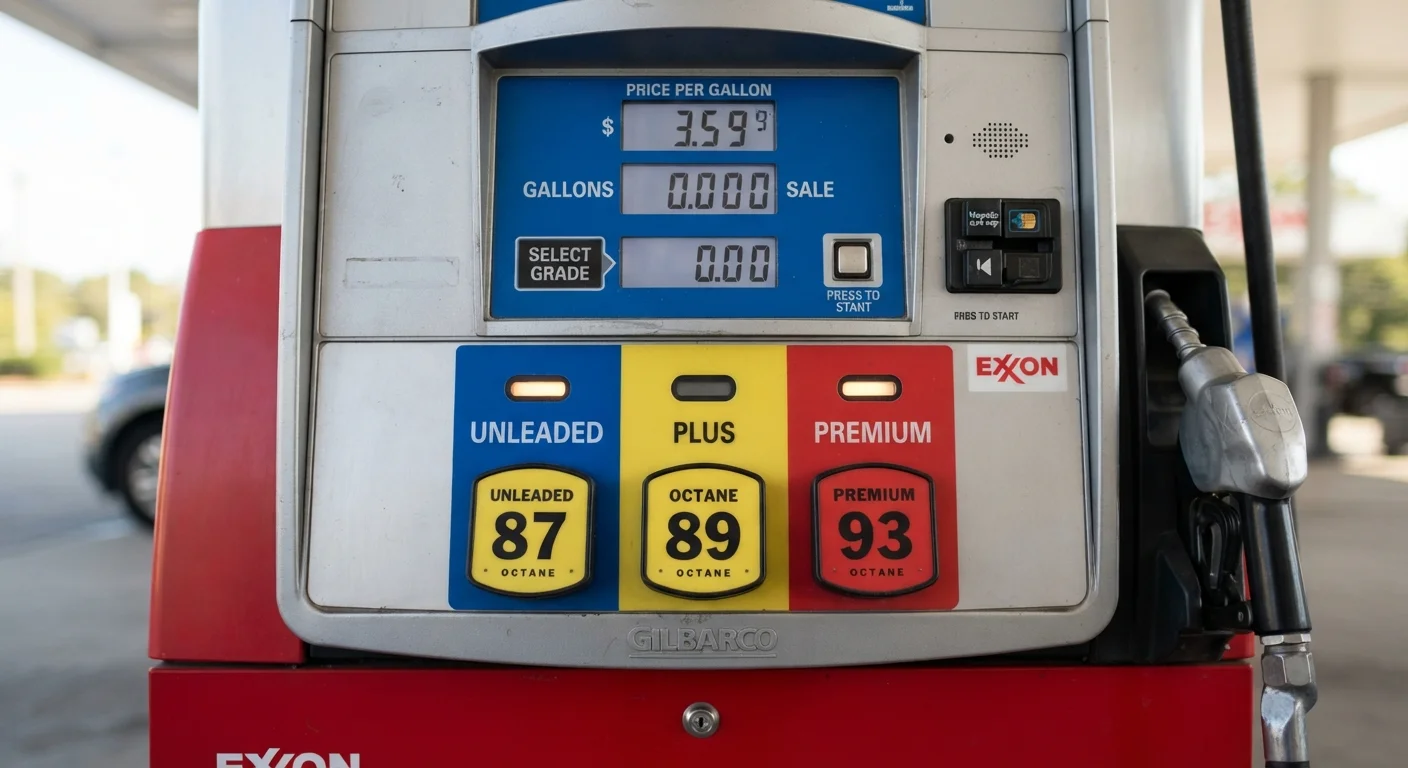
Photo credit: ProximityFinds.com | One-stop Reading Source
In this article
Octane isn't about energy content — it's about knock resistance. Learn what that means and when premium fuel is genuinely necessary.
Key Takeaways
- Octane ratings measure a fuel's resistance to premature ignition, not its energy or quality.
- Using premium fuel in a regular-grade engine rarely provides any benefit.
- High-compression and turbocharged engines often genuinely require higher-octane fuel.
- Knocking or pinging is a sign your engine isn't getting the right fuel for its design.
- Your owner's manual - not the pump label - is the authoritative source for fuel recommendations.
What the Number Actually Measures
When you pull up to the pump, those three buttons - 87, 89, 93 - aren't measuring how powerful or clean the fuel is. They represent the fuel's Anti-Knock Index (AKI), which is the average of two laboratory test results: the Research Octane Number (RON) and the Motor Octane Number (MON). Together, they indicate how resistant the fuel is to pre-ignition - an uncontrolled combustion event that happens before the spark plug fires.
In a properly functioning engine, the piston compresses the air-fuel mixture and the spark plug ignites it at precisely the right moment. Knock - that metallic pinging sound under acceleration - happens when fuel ignites too early due to heat and pressure alone. Higher octane fuel simply withstands that pressure longer without self-igniting. That's the whole story.
Just as understanding fuel is part of knowing your engine, understanding what your motor oil grades mean can help you make better decisions for your vehicle overall.
Common Myths About Octane - Corrected
The gas station is one of the most myth-dense places in automotive culture. Misconceptions about octane have persisted for decades, partly because premium fuel costs more and consumers naturally associate price with quality. Here's what the evidence actually shows.
Myth
Higher octane fuel has more energy, so it makes your car faster and more powerful.
Fact
Octane ratings measure knock resistance, not energy content. Premium fuel won't add power to an engine not designed for it.
This is probably the most widespread octane misconception. The number on the pump - 87, 89, 93 - is an AKI rating, a measure of how well the fuel resists pre-ignition (commonly called knock or ping). It tells you nothing about how much energy the fuel releases when burned. A regular-grade engine running premium will perform nearly identically to one running regular. The engine's power output is governed by its design, not the octane level above its minimum requirement.
Myth
Putting premium gas in any car will clean the engine and extend its life.
Fact
Detergent additives - not octane level - are responsible for keeping fuel injectors and intake valves clean.
All grades of gasoline sold in the U.S. are required by the EPA to contain a minimum level of detergent additives. Some fuel brands add more than the minimum (marketed as "Top Tier" fuel), but that's a separate quality distinction from octane grade. Using 93 octane in a car designed for 87 doesn't deliver an extra cleaning benefit - you'd just be spending more money for the same result.
Myth
If my car runs fine on regular, there's no reason to ever buy premium.
Fact
For engines that require premium fuel, using regular consistently can cause real mechanical harm over time.
Most everyday vehicles are engineered for 87 octane, and regular is exactly right for them. But high-compression engines and many turbocharged engines are tuned to need higher octane to avoid knock. Modern engine control systems use knock sensors to retard ignition timing when they detect pre-ignition, which prevents immediate damage - but it also reduces power and efficiency. Running a premium-required engine on regular long-term puts those knock sensors under constant stress and keeps the engine operating below its intended parameters.
Myth
Mid-grade (89) fuel is always a safe compromise between regular and premium.
Fact
Mid-grade rarely offers a meaningful advantage over either regular or premium for most drivers.
Mid-grade exists partly as a blending option and partly to give consumers a psychological middle ground. But most engine calibrations are optimized for either 87 or 91-93 octane. If your car calls for regular, 89 won't improve anything. If it requires premium, 89 likely won't supply enough knock resistance to fully protect a high-compression engine. Check your manual - there are very few vehicles for which 89 is the specified grade.
Myth
Octane requirements never change - what worked at purchase will always work.
Fact
Engine carbon buildup over time can increase effective compression ratio, sometimes raising octane needs.
As engines age, carbon deposits can accumulate on piston tops and combustion chamber walls. This effectively raises the compression ratio and can make an older engine more prone to knock on the fuel grade it handled fine when new. If an older vehicle starts knocking on the grade it always ran, a step up in octane or a professional engine cleaning may be warranted - and a mechanic should assess the situation.
Always Follow Your Owner's Manual
If your manufacturer specifies "required premium" fuel, using regular-grade gasoline can cause engine knock, reduce performance, and potentially cause long-term damage. "Recommended" means premium is preferred but regular is acceptable with possible minor performance adjustments. When in doubt, open the glove box - your manual has the definitive answer.
How to Know What Your Car Actually Needs
The simplest, most reliable source is your vehicle's owner's manual. Look for the fuel specification - it will say one of three things: regular recommended, premium recommended, or premium required. That distinction matters enormously.
Many manufacturers also print the minimum octane rating on a label inside the fuel filler door. If it says 91 or higher is required, respect that. If it says 87 is recommended, spending more on premium is unlikely to deliver any measurable benefit under normal driving conditions.
Persistent Knocking Needs Attention
A consistent knocking or pinging sound under acceleration isn't something to ignore. While modern engines have knock sensors that make automatic adjustments, those corrections have limits. If the noise persists after switching to the correct octane fuel, have a qualified mechanic inspect the engine - it may point to a separate underlying issue.
~10%
U.S. vehicles requiring premium fuel
According to the U.S. Energy Information Administration, only a fraction of consumer vehicles on the road are actually designed to require premium-grade gasoline.
87 AKI
Standard regular grade octane rating
The Anti-Knock Index of 87 is the minimum octane level defined as regular grade across most of the contiguous United States.
Turbocharged and direct-injection engines are increasingly common in mainstream vehicles, and many of them do specify premium fuel. If you're unsure about a vehicle you're considering or recently purchased, the manual and the fuel door label are always your first stops - not the internet or the pump attendant.

Author
Automotive Editorial Team
Automotive Editorial Team is the collective byline for our editorial team and contributor network. Articles published under this byline or an editorial pen name are researched, written, and reviewed according to our editorial standards for clarity, consistency, and independence before publication.
View all articles →